
University of Richmond celebrates Sweden and international education
CAMPUS LIFE
The Center for Global Engagement hosted International Education Week: Sweden, which focused on the country’s culture, cuisine, and sustainability practices.
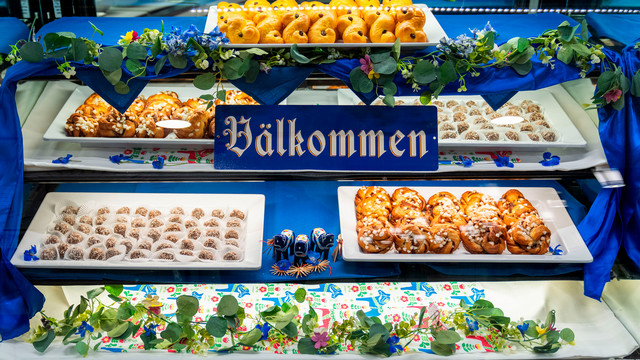
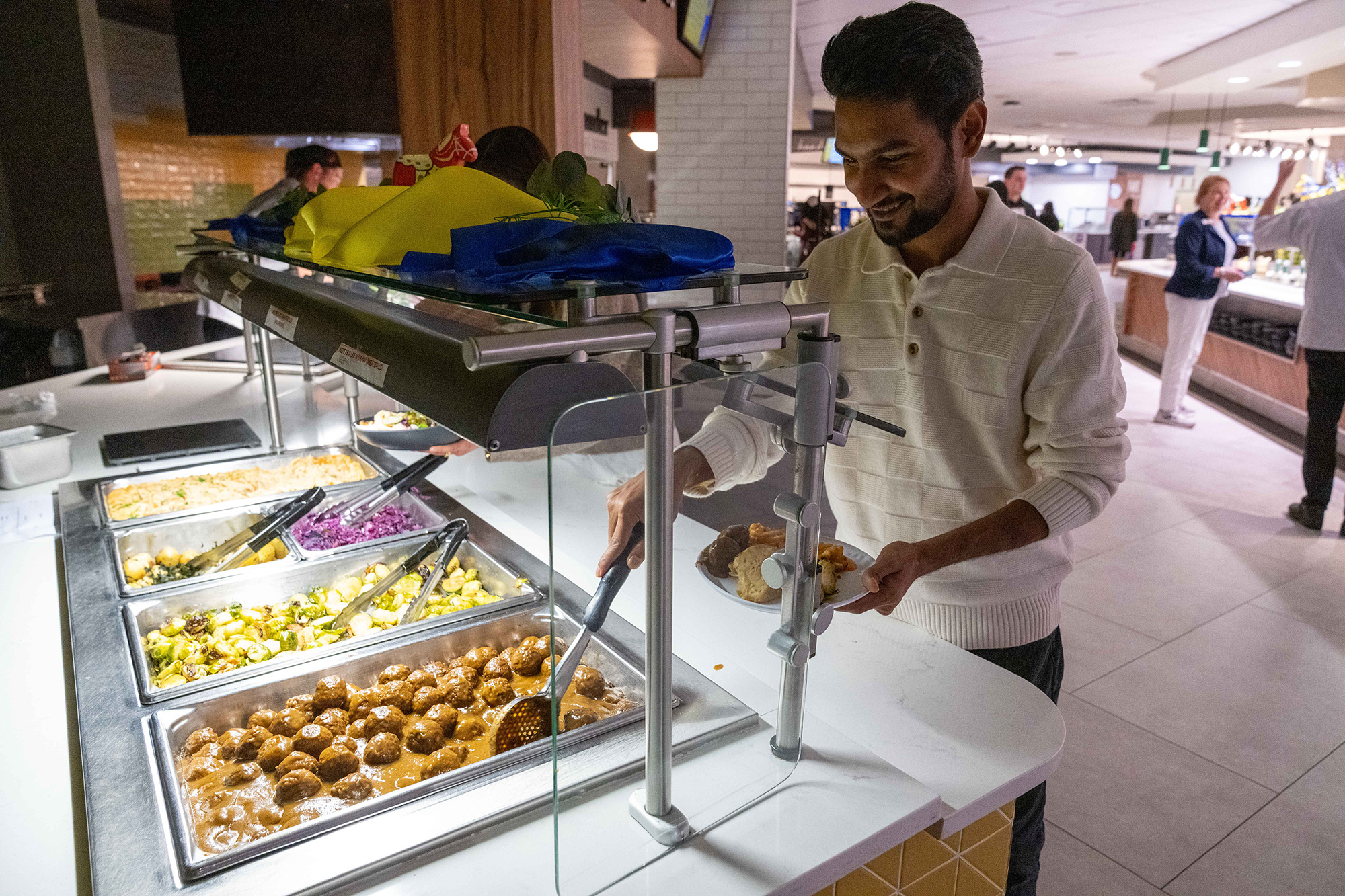
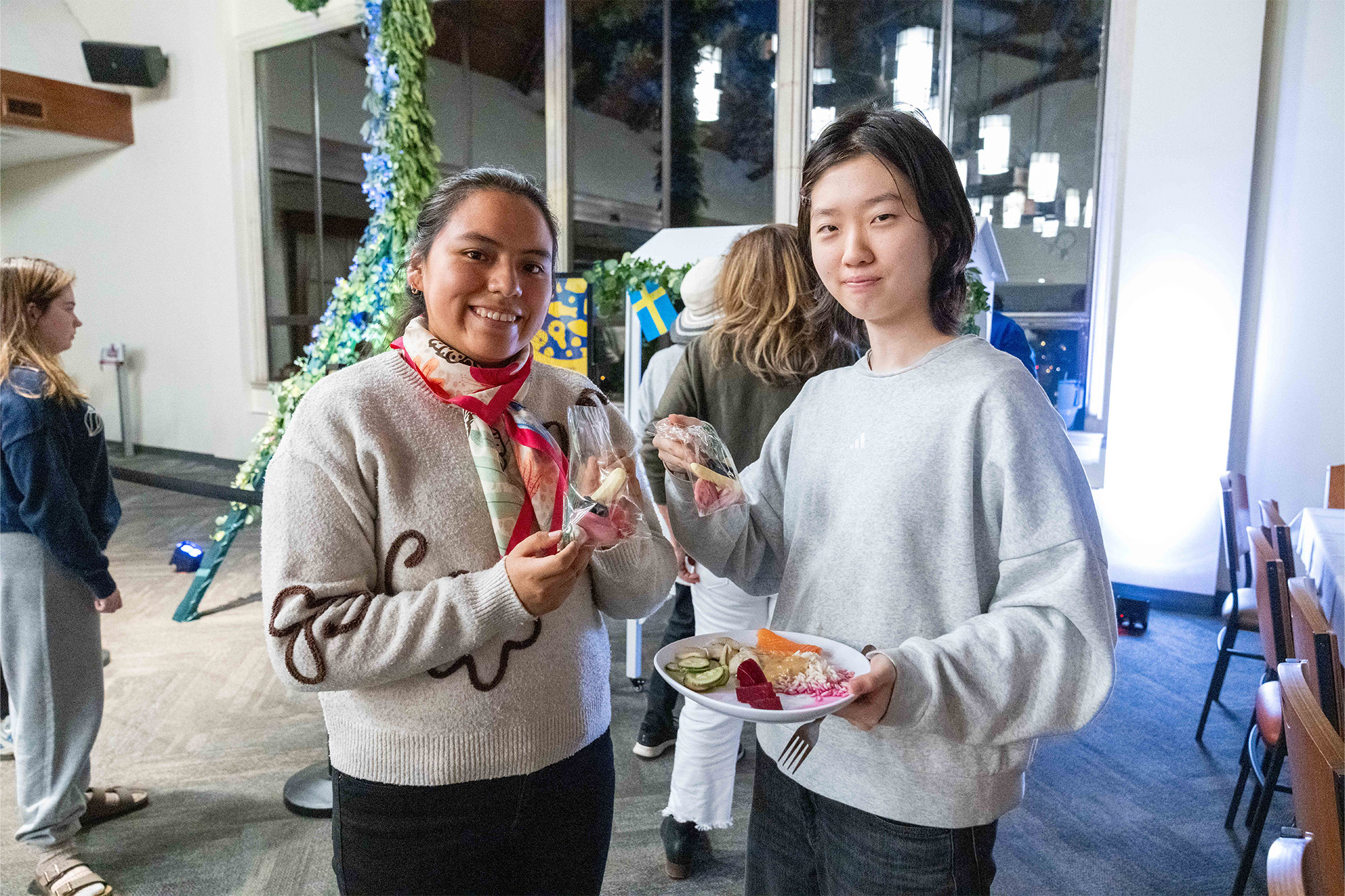
Until last week, senior Will Anar Erdene had tried Swedish food only at IKEA. But International Education Week gave him the chance to take a deep dive into the Scandinavian country’s cuisine, from fragrant cardamom buns and cured salmon to the famous meatballs with gravy and lingonberry jam.
“It was more authentic,” Anar Erdene said, of the dishes presented by Dining Services after extensive research that included consultation with Swedish exchange students. “I always love trying food from different cultures. It gives you a glimpse into the country and the people.”
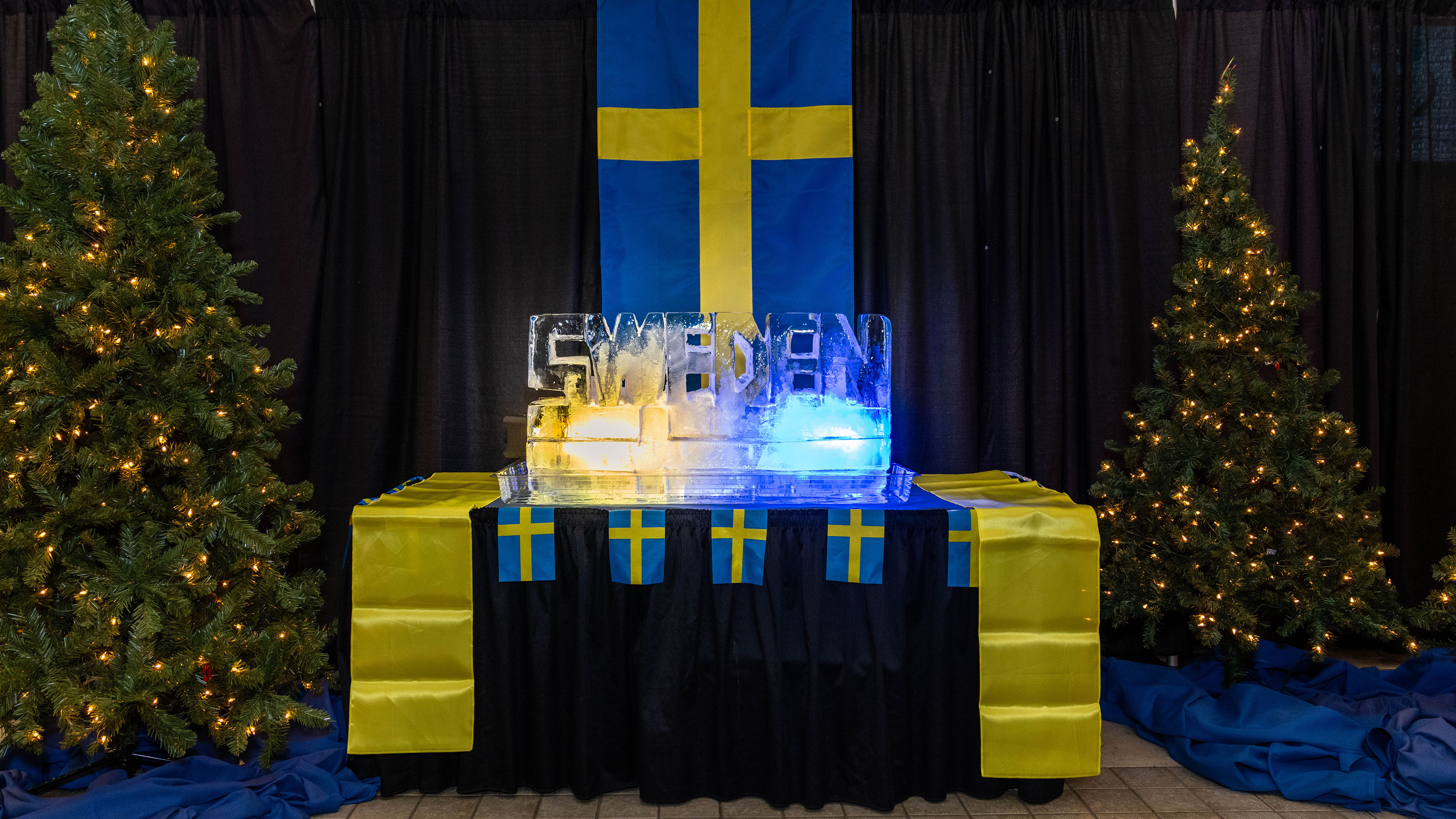
A Swedish breakfast, midday fika, and dinner were part of the immersive experiences offered Nov. 16-19 by the Center for Global Engagement, Dining Services, and the Office for Sustainability for International Education Week: Sweden. This was the ninth year that UR has celebrated an expanded IEW, a national initiative by the U.S. Department of State and the U.S. Department of Education that highlights the benefits of international education and global exchange programs.
“UR puts on one of the most extensive, if not the most extensive, programming for International Education Week of any university in the country,” said Martha Merritt, dean and the Carole M. Weinstein Chair of Global Education. “Once we started a country focus in 2017, so many across campus got involved to build these engagements."
"This year, Sweden offers us a model of how entrepreneurship, sustainability, and design can come together, and a reminder that global learning happens as much in conversation and over shared meals as it does in the classroom,” she said.
Swedish design panel and other events

At a design panel, home organizer Kristen Ziegler explained the decorating aesthetic of lagom. “It means not too much, not too little. … It’s about finding the perfect balance,” said Ziegler, the owner of Richmond-based Minima, who has been strongly influenced by Swedish attitudes and design sensibilities.
Swedes prioritize breathing room in the home and bringing the outdoors in with raw, organic materials for furnishings. Using soft, reflective tones helps bounce light around — important in the long winters, Ziegler said.
Other guest lecturers include Laura Carlson, president of the University of Delaware; Andrew Merrie, a research liaison officer at the Stockholm Resilience Centre; Teresa Fazio, technical staff member in the Human Resilience Technology Group at MIT Lincoln Laboratory; and Jonathan Geib, a faculty member for DIS Abroad Stockholm.
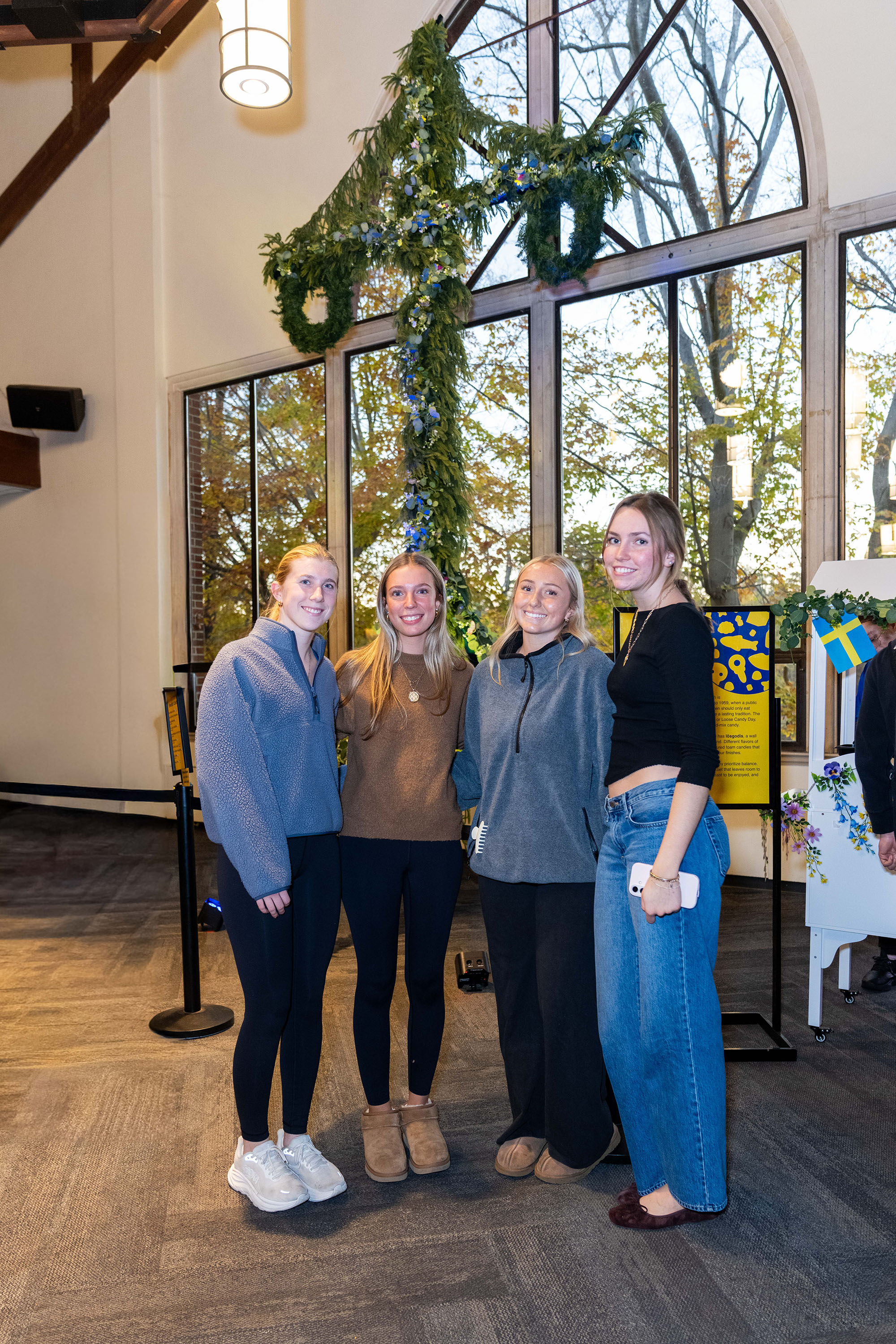
Among the week’s many activities, the Spider community also had the chance to harvest a “swede” (another name for rutabaga) in the Eco-Corridor, attend a Swedish fiddle folk performance, and visit the International Education Week Fair, which showcased UR and Richmond’s connections to Sweden on topics of social policy, children’s literature, sustainability, and more.
Stockholm Resilience Centre

Leaders from the Stockholm Resilience Centre, a renowned sustainability and resilience science center focused on advancing science for a livable planet, took part in two panels.
“Resiliency is a dynamic process,” said Andrew Merrie, a research liaison for the center, during the Resilience Science Must-Knows panel. “Stability can be a trap. Stable systems can become rigid and vulnerable if they resist change.”
Allowing diversity of thought into the process can act as a buffer, providing options and fueling innovation.
Merrie told a story from the Green Revolution in Mexico, where American agronomist Norman Borlaug developed varieties of wheat resistant to wheat rust, a fungus that can destroy up to 90 percent of a crop. As part of the process, a teenage assistant from Mexico worked out a way to sample the seeds that saved them years of work.
“We don’t always know where all the best ideas and innovations will come from,” Merrie said.
Among those attending the panel was Anar Erdene, a business major with a concentration in finance and a minor in sustainability. “I took some classes, and it fell in line,” he said, of his minor. “I think sustainability is such an important part of finance and the future of business. … I love how sustainable Sweden is.”
His Geography 250 class required that students attend at least three events — and he had already done that and more.
“I think it's amazing,” he said, of IEW. “I think it's really important to learn about different cultures and open your mind.”
More photos from the Swedish dinner by Jamie Betts, University photographer


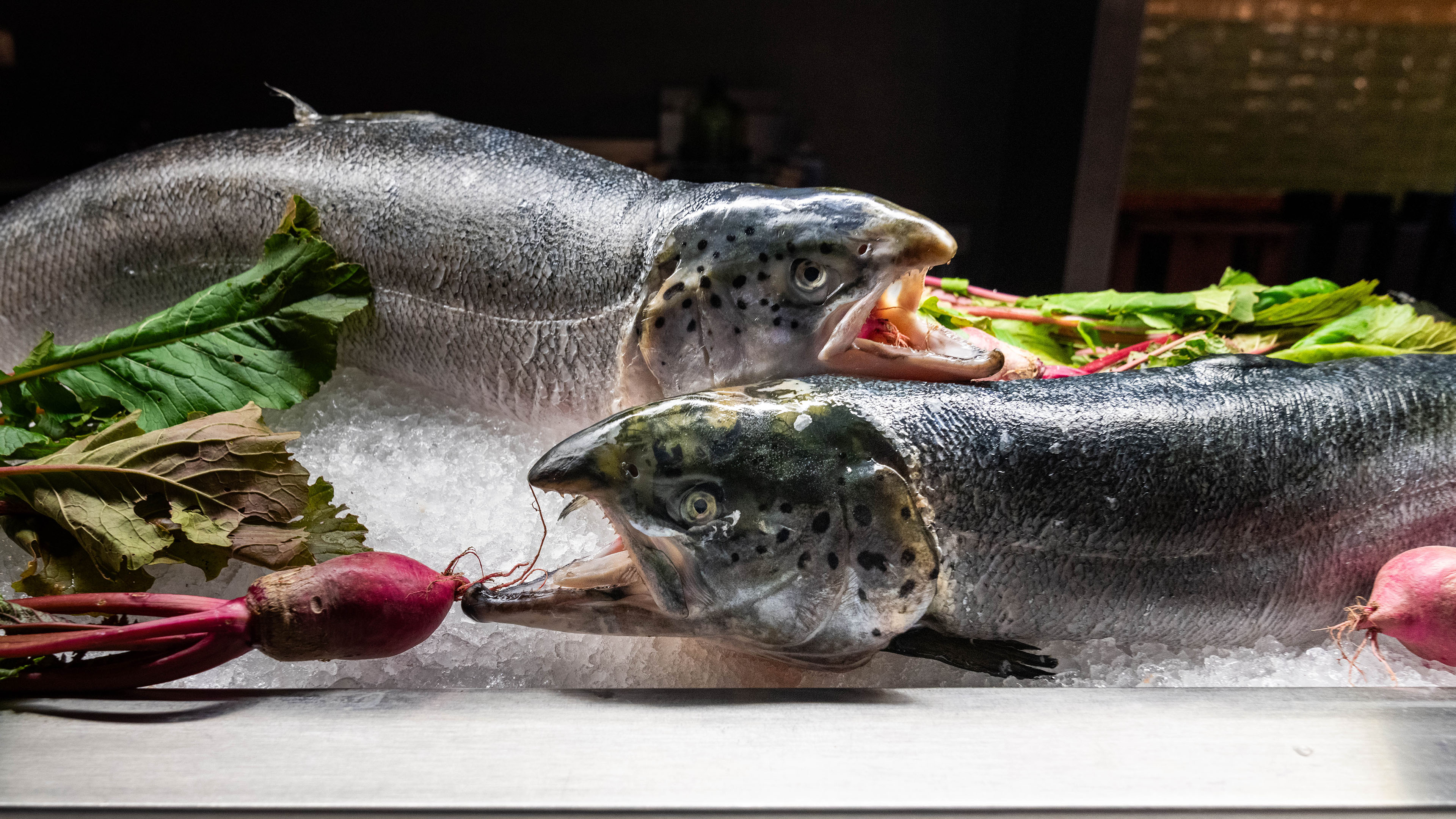
Salmon on display near a station with pickled herring, smoked salmon, and pickled vegetables. The display salmon were kept on ice and at temperature so they could be prepared for another meal.