
University of Richmond community remembers loved ones on Día de los Muertos
STUDENT EXPERIENCE
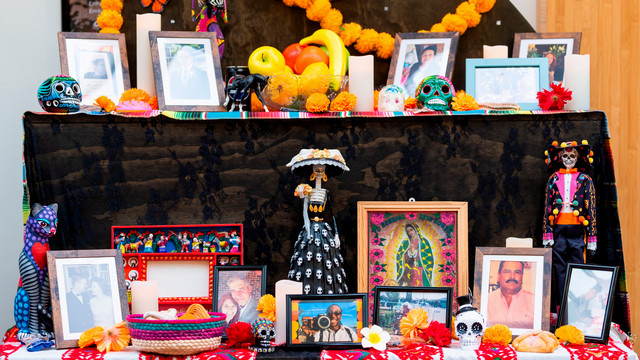
This week, students and others in the Spider community are taking part in a cherished Latin American tradition by adding photos of beloved family and pets to an ofrenda, or decorated altar.
Growing up in a Guatemalan household, senior Emerson De Leon-Alvarez knew the importance of the Día de los Muertos tradition. Now that he is away from home, the ofrenda has become even more meaningful to him, he said.
“Being able to remember my loved ones and honor them through this tradition is something that means a lot to me,” he said. “It gives me an opportunity to celebrate their life and keep their memory alive even when they are no longer with us in the physical world.”
De Leon-Alvarez had the opportunity to remember his loved ones by placing their photos in a Día de los Muertos altar on display in the meditation garden of the Well-Being Center from Nov. 2 to Nov. 9, sponsored by the Hub for Student Inclusion and Community.
Students and others in the Richmond community have filled the space with photos of family, including pets, that they wish to remember. Dafne Luna, an assistant director for the Hub, drew from her Mexican-American heritage to start the program four years ago. UR Now asked her about the tradition.
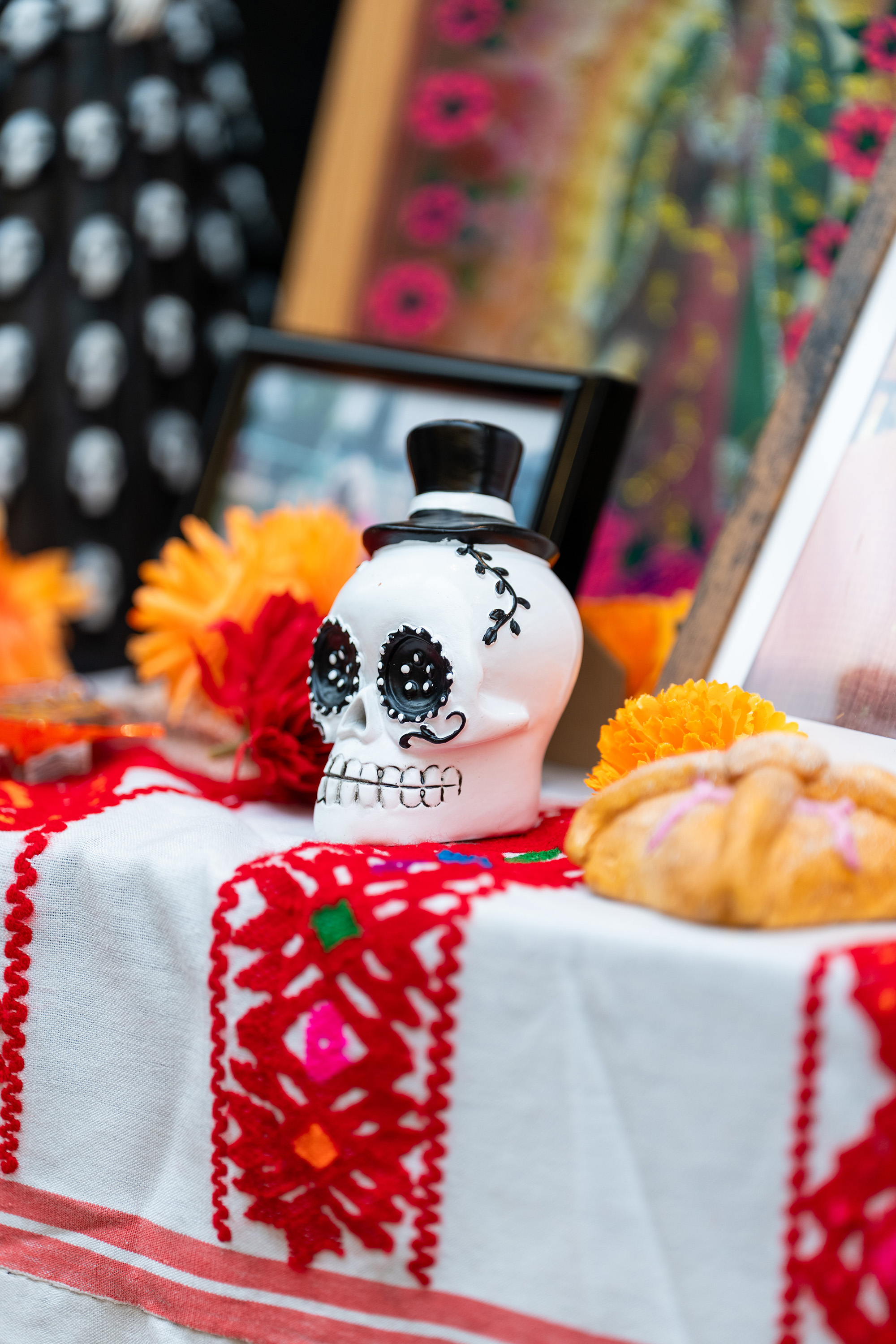
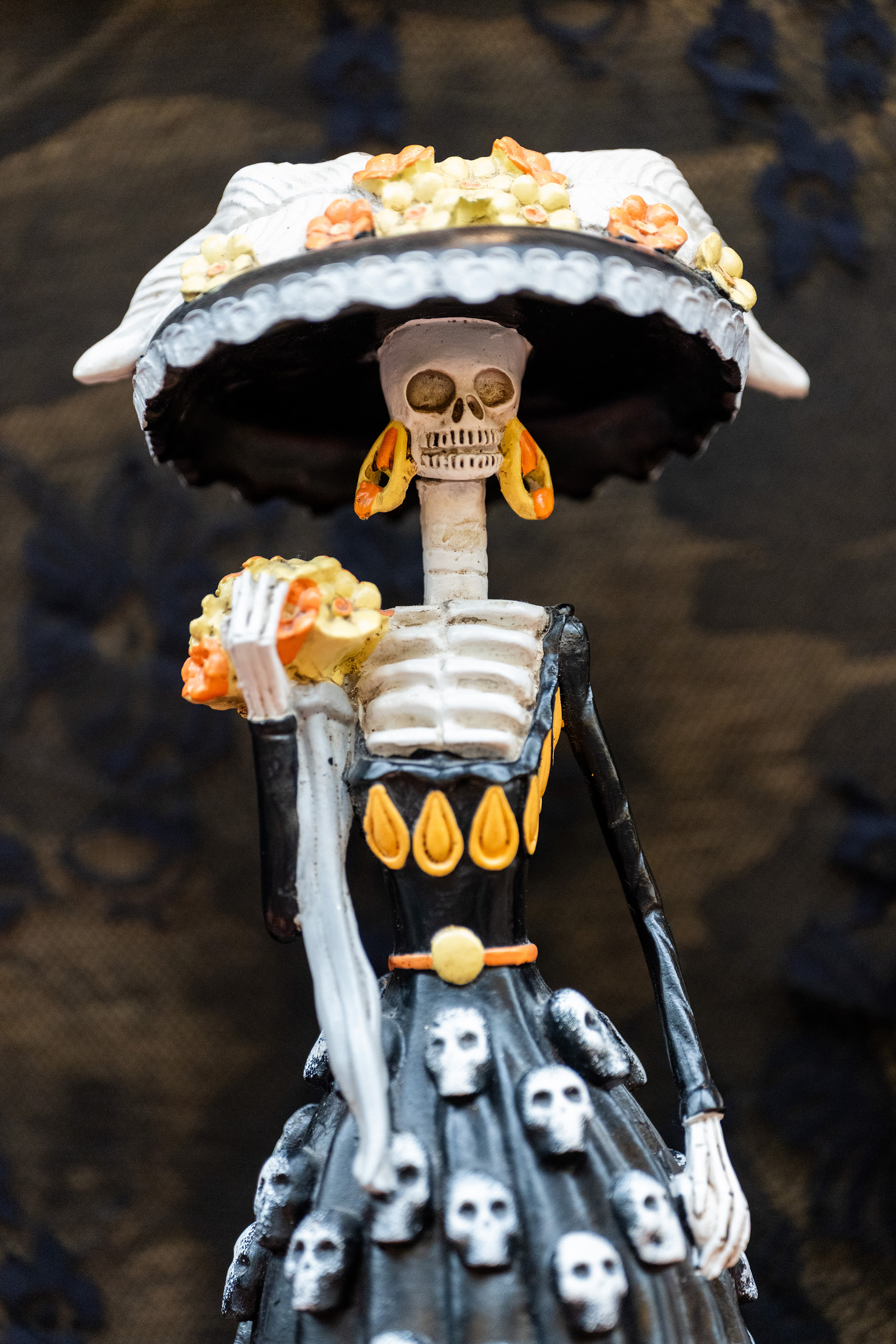
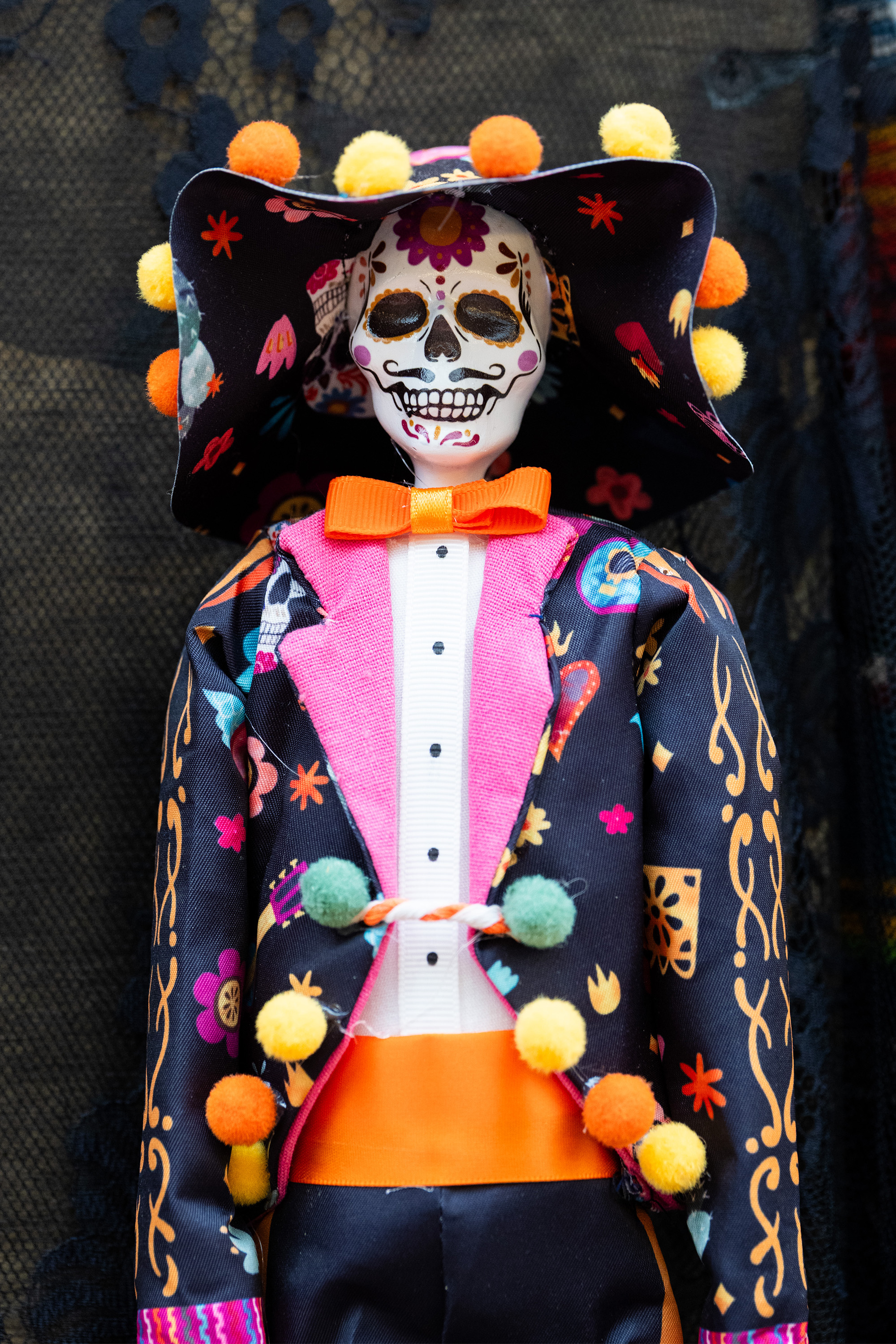
Día de los Muertos (Day of the Dead) is a Latin American holiday typically celebrated from Oct. 31 to Nov. 2 in which families welcome back the souls of their deceased loved ones in a joyful reunion filled with food, drinks, and music. Families and friends typically bring offerings to gravesites or home altars known as ofrendas. The offerings may include their departed’s favorite food and drinks, toys for children, flowers, and other important mementos.
Each component of the altar serves the purpose of helping the souls travel back to us. In Mexican culture, the arch serves as a doorway to our world; the picture and candles are visual guides for that soul to travel to the right place; the marigolds, incense, and copal are understood to be the favorite scents of the spirits; and papel picado (perforated paper streamers) to signify the wind that spirts use to travel. The food and water are not only for us to share, but to offer sustenance for the long trip these souls took to visit us.
Why is this holiday important to Latin American communities?This tradition is especially important in Latin America because these practices go as far back as pre-colonial times. Over time, the practice has blended aspects of Indigenous and Catholic practices to become its unique flavor of celebration.
Different Latin American cultures have unique aspects to their altar or Day of the Dead celebrations, ranging from kite festivals in Guatemala to children dressing up as angels in Belize. All this effort, artistry, and energy is simply for us to continue celebrating the lives that were lost and remind us that we have so much joy to live through before moving on.
For me, it was important that the ofrenda was open to all the UR community because death is one of the aspects of life that we all share. My hope is that sharing these practices creates bridges across differences for anyone who chooses to participate. I want everyone’s loved ones to be celebrated and remembered from a place of joy and to know that even in death, no one is alone.
I started this tradition at UR in the Fall of 2022. This was one of the first things I wanted to implement at the university when I first took on my role. We were still navigating the Covid-19 pandemic and all the loss that came with it.
I was pleasantly surprised that the Chaplaincy at UR already had a tradition of sending out remembrance emails, which didn’t shy away from death. This encouraged me to go forward with creating our Día de Los Muertos altar to offer space to mourn the impact of Covid-19 on all of us, but to invite a different way of moving through grief. While death is sad and hurts, in my culture it’s not the end. It is simply part of a larger journey that both the living and dead take together.
The Día de los Muertos is one of the favorite traditions of many of our Latinx students. Some students have never seen an altar in person and simply understood this holiday from the Disney movie, Coco. So for them, it was the beginning of their connection to their culture and learning more about themselves.
American culture heavily focuses on moving on from grief and minimizing the impact death has on people. I’ve had many non-Latinx students and staff thank me for letting them express their grief in a way that doesn’t minimize or ask them to put it away. Some hadn’t talked about their loved one in years; for others, this was the first time anyone asked about the person they lost. Overall, it seems to be a very healing and joyful experience for everyone who gives me the privilege of celebrating their loved one.