On this University of Richmond syllabus: Watching the birds — and the bird watchers
STUDENT EXPERIENCE
As an ornithology class tracks feathered friends in the Eco-Corridor, a psychology class studies the birders themselves.
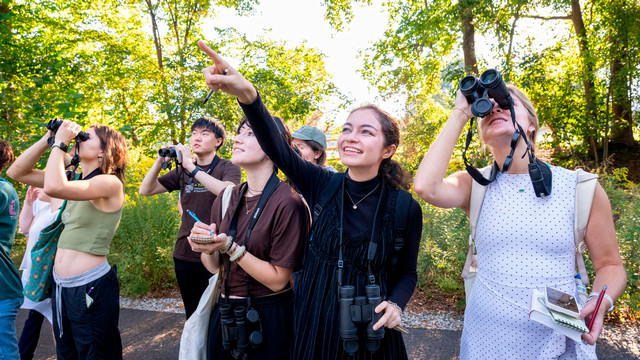
Two classes with very different goals gathered last week in the Eco-Corridor for a nature walk. Students from an ornithology class were on the lookout for birds. Students from a psychology course were there to observe the observers as part of a course on visual cognition.
“Birders are huge contributors to the science of vision because they have developed an ability to identify and distinguish birds from one another,” psychology professor Arryn Robbins said. “We're learning about visual expertise, and birders are a great example of that.”
Armed with binoculars, notebooks, and Sibley Birds East guidebooks, but no phones, students in biology professor Allison Cornell’s ornithology class meandered down the trail, stopping to listen to calls and watch for birds in flight and perched in trees and other structures.
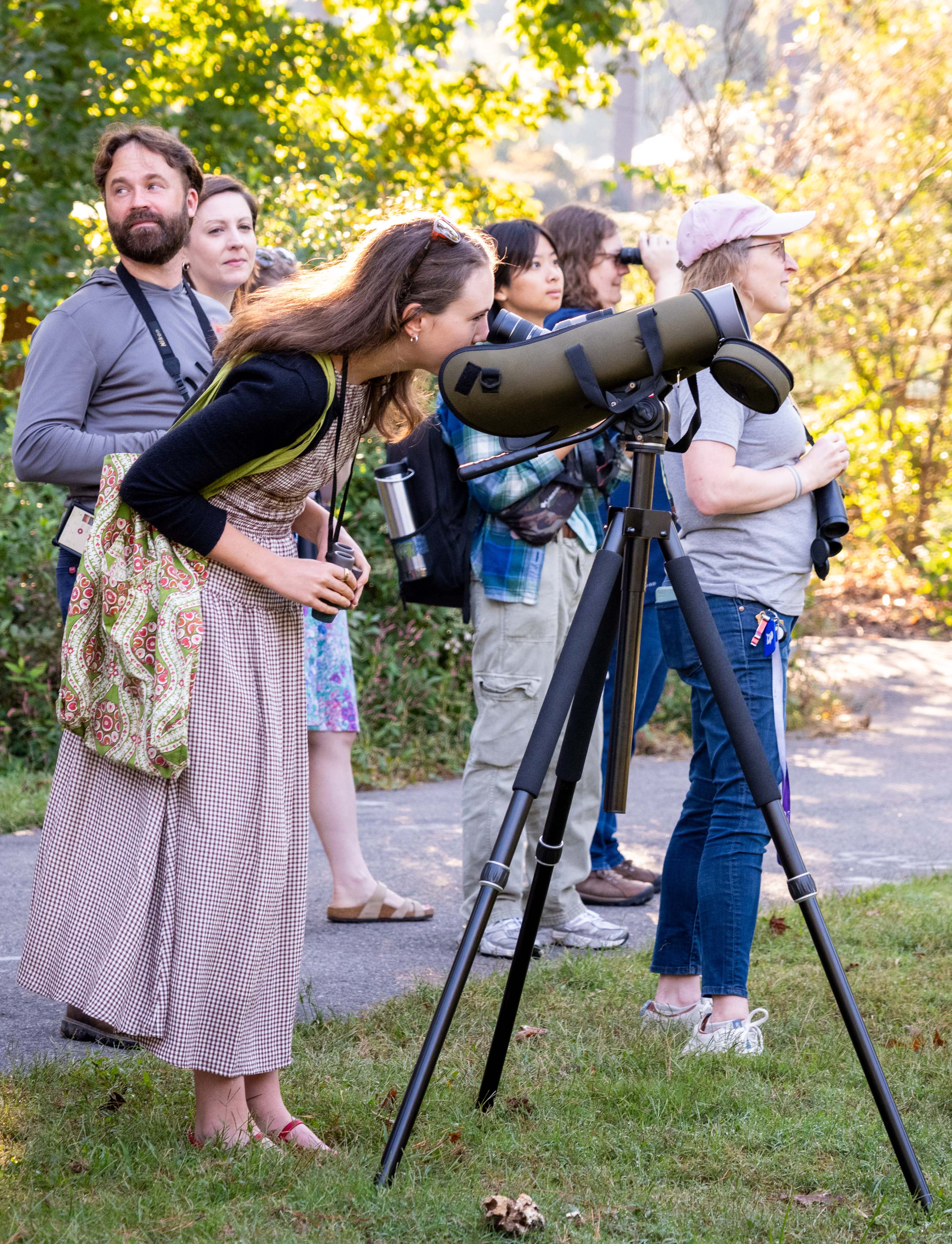
“The birds are in the middle of fall migration season,” biology professor Priscilla Erickson, a bird expert who accompanied the classes, said. “Billions are moving from north to south. It’s an exciting time. There were 300,000 passing through Virginia last night according to BirdCast.”
When students spotted a bird, Erickson advised them to keep looking at the subject and bring the binoculars to their eyes, instead of moving their head. Otherwise, it’s easy to lose the bird’s position.
The students noticed a flock flying overhead. Bluebirds, likely some of the year-round residents who live in the nest houses along the trail, Cornell told them. Those tracked by her summer research lab have leg bands.
The group stopped to listen to a bird they identified as having the call of a blue jay. Following the sound, they spotted a bird in a nearby tree. They realized it was a northern mockingbird, a grey bird with white flashing on its long, tail feathers — a prankster playing at being a blue jay.
“He doesn’t have his own song,” Cornell said. “He just mimics other birds.” The older the mockingbird, the more songs it knows, she explained. They can even mimic car alarms.
“Now, he’s copying a titmouse — can you hear it?” asked senior Vanessa Giraldo-Castaño.
Giraldo-Castaño, a biology major who has been a birder for more than three years, enjoys the opportunity it gives her to disconnect and get more in tune with nature. She recently saw her first magnolia warbler on a walk. “It’s like Pokemon,” she said, with a laugh. “I like collecting all the birds I’ve seen that day.”
In summer 2025, she studied abroad in Australia and saw in the wild a cassowary, a notoriously ill-tempered ostrich-like bird with 5-inch, razor-sharp claws. “They’re huge — they’re like a dinosaur,” she said.
Senior Sukie Weiner is a biochemistry and molecular biology student who took the ornithology class as an elective. “It’s a nice change of pace from being inside a lab without any windows,” she said.
Senior psychology majors Dylan Javier and Jenn Aguilar were filling out a worksheet documenting the birders and their strategies.
“They have a lot of knowledge that we just don't have,” Javier said. “They’ve been looking at more than color, shape, and size. They also pay attention to the different features of their calls and their different flight patterns. And then other ones also have different feeding habits.”
Aguilar noticed that the birders had very quick responses when they noticed a movement or noise. “Obviously, we’re focused on vision and visual search [in the class] but it’s also important to be able to listen and direct your attention to different sounds and where they’re coming from,” she said.
Both agreed the bird walk made them more aware of their surroundings.
“I think more than usual,” Javier said. “I think usually we [students] just walk around campus and wear headphones or something.”
After the walk, students attended the Harnett Museum of Art’s Shubigi Rao: All Our Elephants Are in Rooms exhibit, which explores how humans make sense of the natural world.
This semester, the ornithology class will travel to 10 locations, including James River Park, Three Lakes Park, and Malvern Hill Battlefield Park, for birding.
Birds around campus
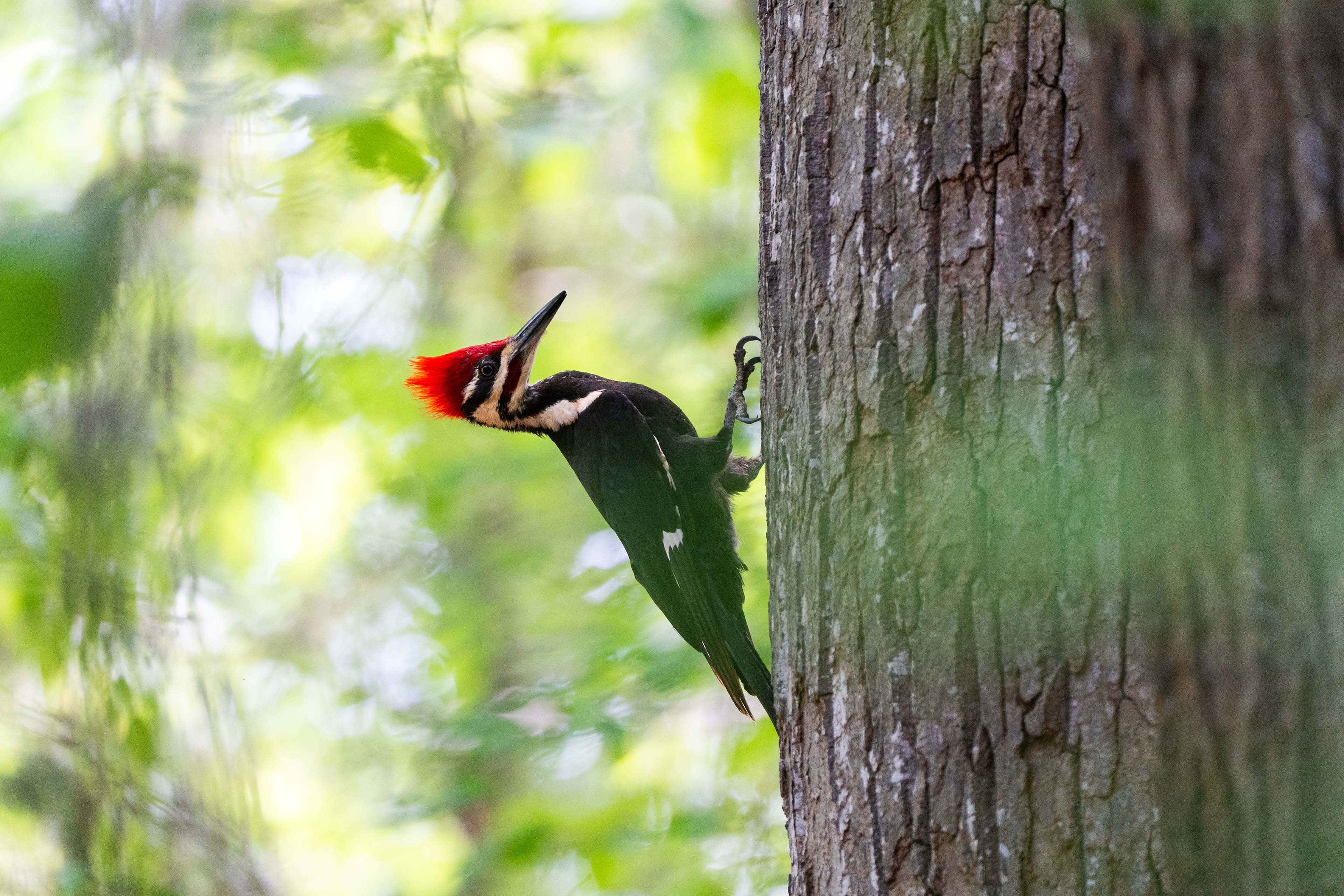
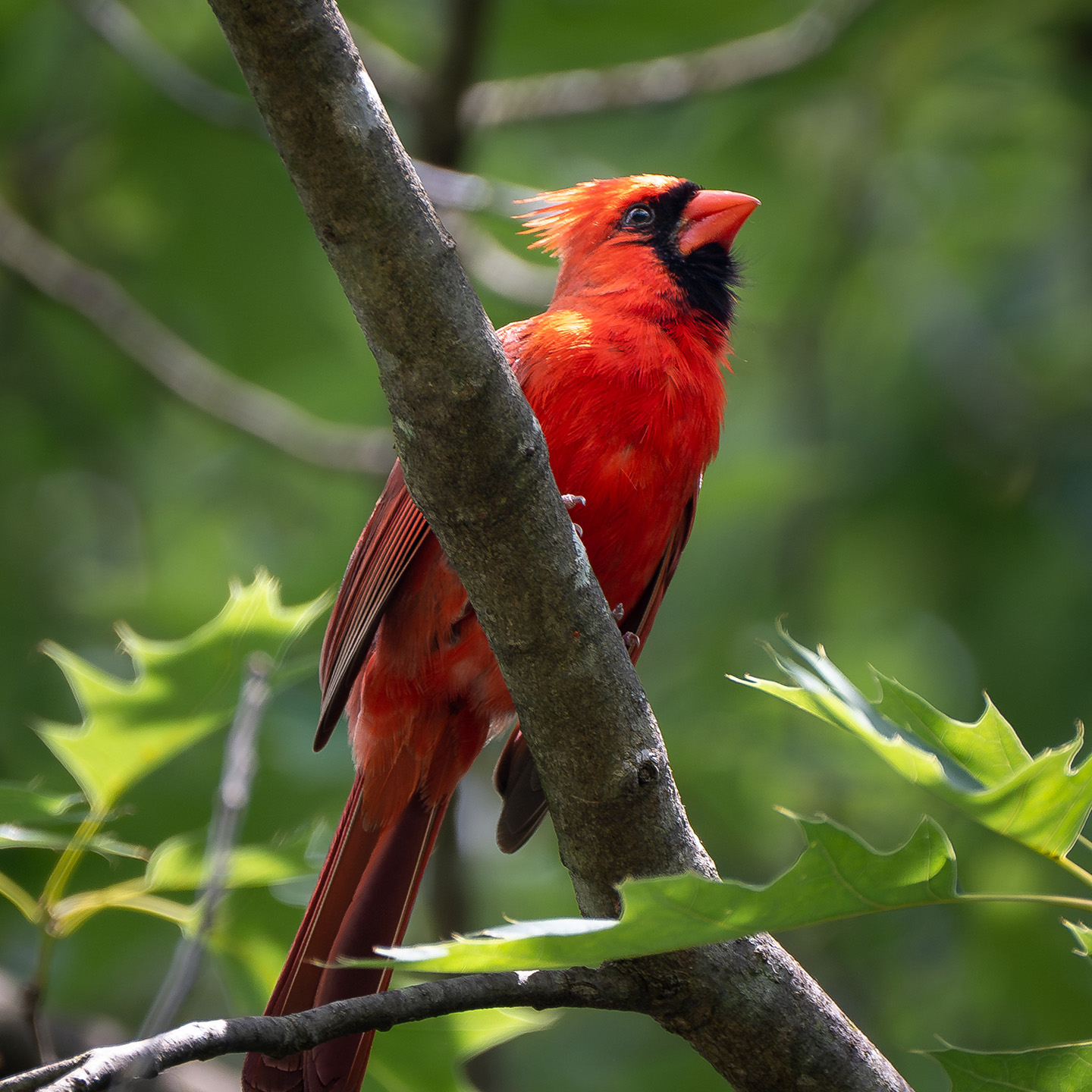
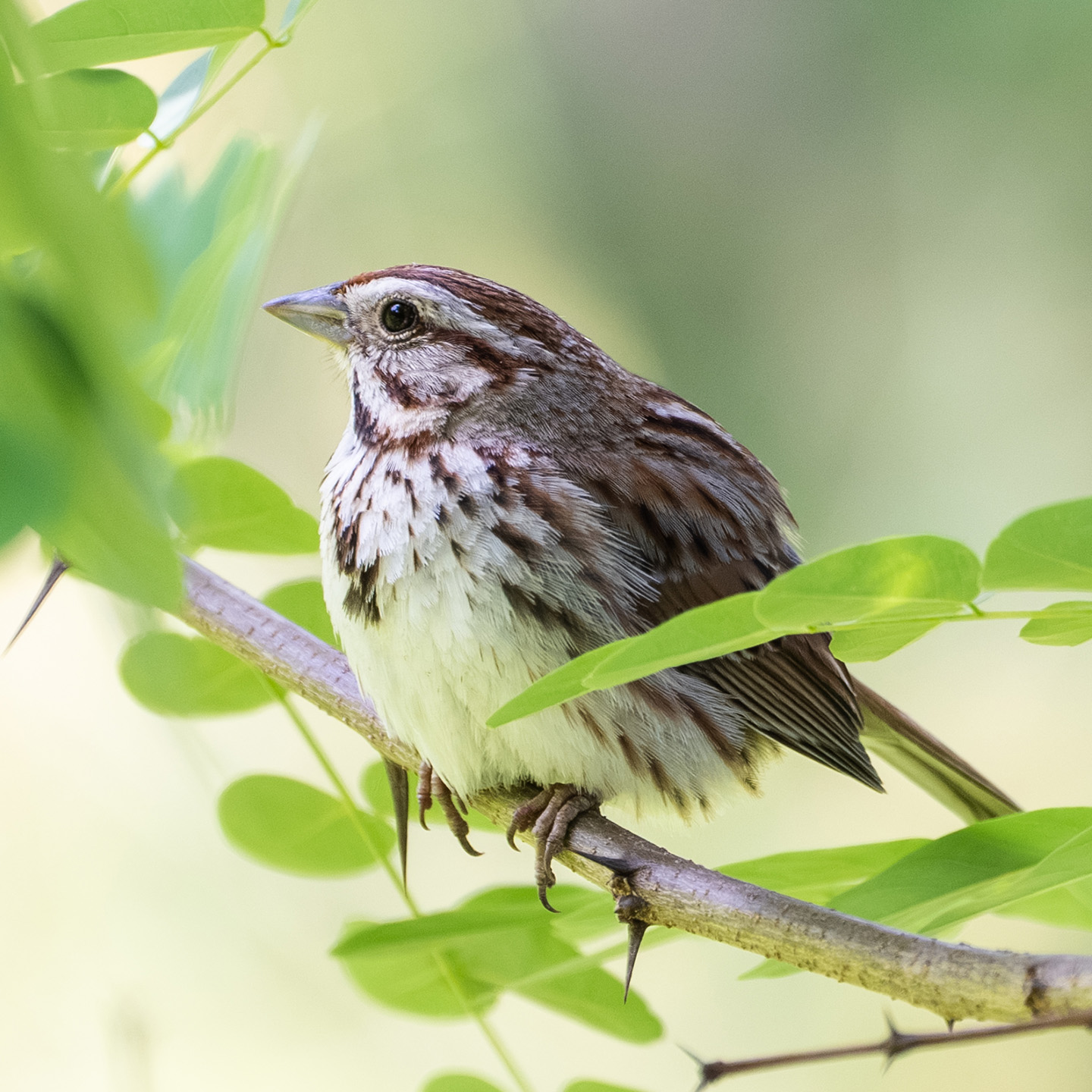
Here are some photos of birds university photographer Jamie Betts has recently taken around campus.