
University of Richmond offers its first summer study abroad in South Korea
STUDENT EXPERIENCE
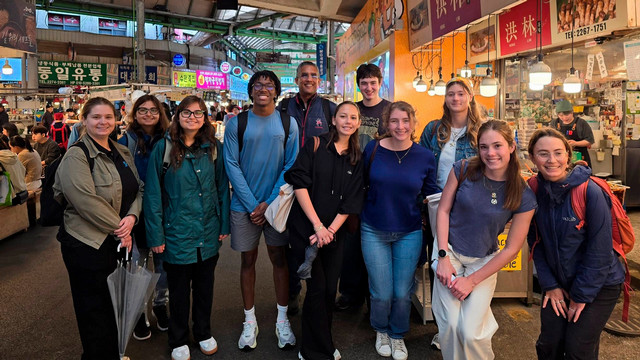
Walking through the bustling streets of Seoul, students passed street vendors with carts loaded with smoky chicken skewers, golden-fried fish cake, and sizzling pans of mung beans and pork.
“For all of them, it was their first time in Asia,” said political science professor Monti Datta, who recently returned from five weeks in South Korea leading University of Richmond’s first faculty-led, summer study abroad there. “I was deeply mindful that everything they saw, everything they tasted, every door they walked into, was literally into another world.”
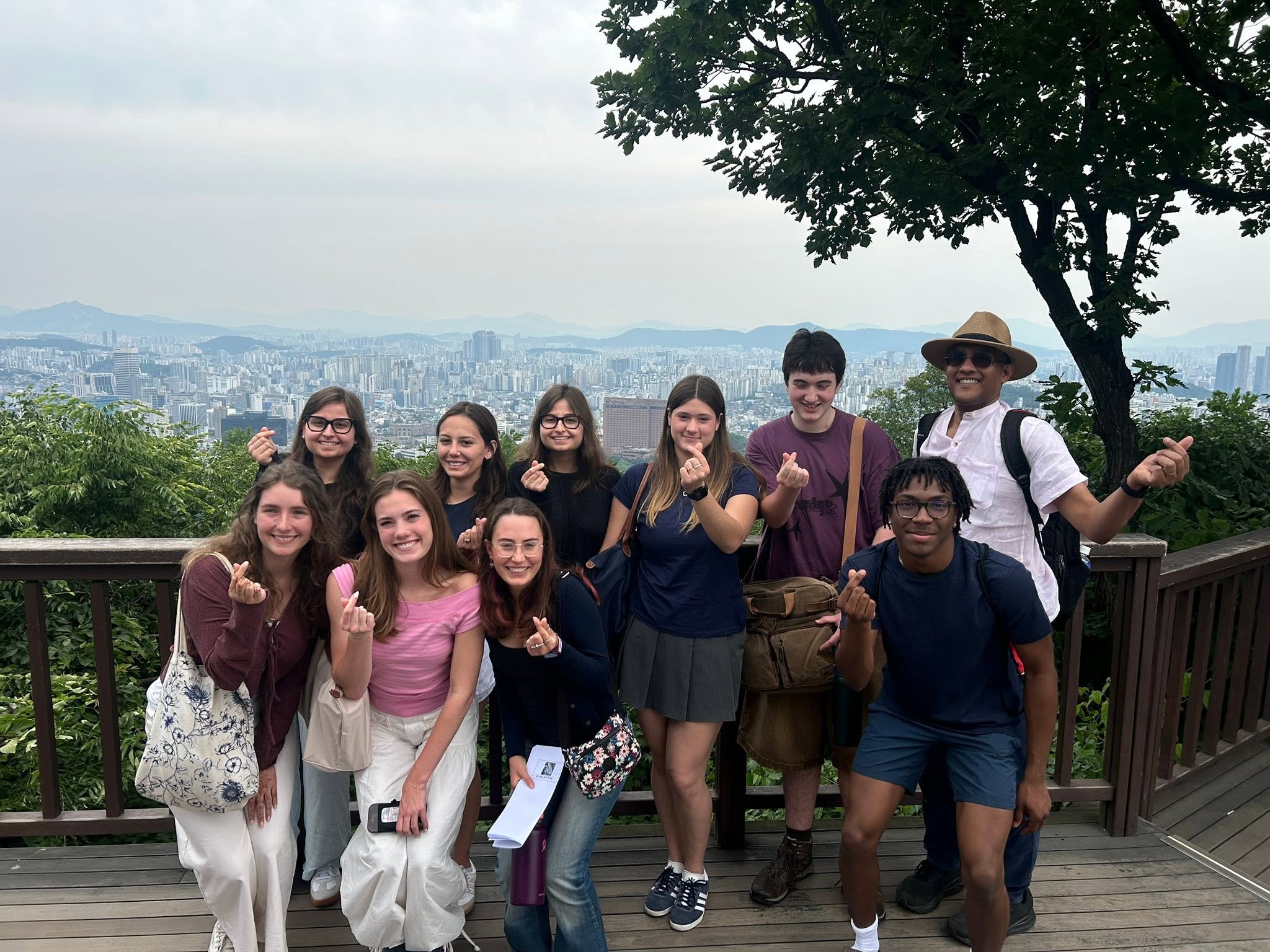
The nine students took a class, Introduction to International Relations with Peace and Conflict on the Korean Peninsula, followed by Datta-led field trips each day.
The students met with local peacebuilders and NGOs and took part in a range of cultural activities, including a K-pop dance class in Gangnam, taekwondo instruction, and visits to museums and historical sites throughout Seoul. In a cooking class, they learned to make the traditional rice dish bibimbap.
They joined an ongoing, weekly demonstration demanding recognition and justice for the tens of thousands of women forced into sexual slavery by occupying Japanese forces during World War II. The protest, which has taken place since 1992, is recognized by the Guinness Book of World Records as the world’s longest. The students were featured on the local news.
“It felt very real to see something that we had watched videos and read articles about come to life,” said Julian Francis, a sophomore from New York City. “It isn’t just a concept: it's a lived reality.”
Francis was impressed with the country’s meticulous recycling system and the care with which the subway platforms are enclosed to prevent falls onto the tracks.
“You can tell that Korean society is built on a foundation of community and empathy … centered on grace and respect,” he said.
Datta, who has traveled throughout Asia and whose spouse is Korean, said he planned the journey to expose students to a new culture and study abroad option that is not always top of mind for American students. While much of Europe is an easy plane ride from Virginia, traveling to East Asia takes at least 20 hours.
“I think there is often of a sense of otherization of things in Asia that is unhealthy for a lot of reasons geopolitically,” Datta said.
The experiential learning immersed the students in this world, making it more familiar and complex than stereotypes formed at a distance.
Perhaps no experience demonstrated the region’s complex realities better than when the group stood at the heavily guarded demilitarized zone separating North and South Korea. Students looked north across the border with binoculars.
“I think because of the narratives you hear, all you think about [North Korea] is fear and evil, right?” Datta said. “But when you're there, and you look over, you can see people — sometimes working in the fields.
“You realize you're looking at other human beings, just trying to survive.”