
A University of Richmond librarian’s research restores two missing acts to Puccini’s ‘Edgar’
RESEARCH & INNOVATION
Linda Fairtile spends her days working as the head of Parsons Music Library at University of Richmond, but her nights and weekends are devoted to deciphering the scores and correspondence of notable composers. One of her favorites is Giacomo Puccini, who wrote mammoth hits such as La Bohème, Tosca, and Madama Butterfly.
Fairtile prepares critical editions for operas. These include the notated music for every instrument in the work, with commentary and footnotes illustrating variations. Conductors and singers use the editions to prepare for performances.
“It gives people choices, and it explains the way that we think the composer ultimately wanted it,” Fairtile said. “But you could try these other things that he also authorized at one point. That's what a critical edition does.”
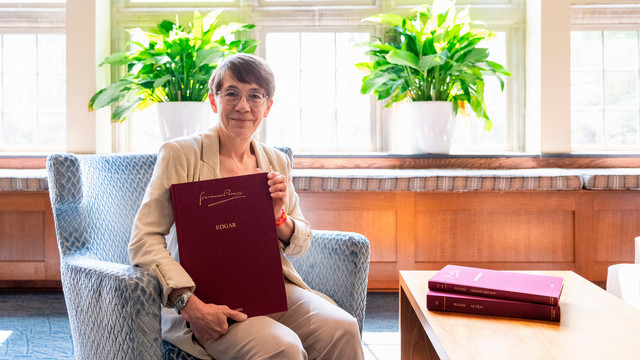
This year saw the publication of her biggest work yet: a two-volume, 1,100-page-plus critical edition of Puccini’s Edgar.
Puccini’s — and Fairtile’s — passion for opera
Fairtile’s introduction to opera came early. When she was 13, her sister turned on a Metropolitan Opera live telecast of Puccini’s La Bohème. Fairtile told her to turn it off — but then watched the whole thing.
“By the end of the night, I was just going crazy,” she said. “What is this? I want to spend the rest of my life doing this.”
Fairtile studied piano and music composition at Oberlin Conservatory of Music and then got her doctorate in musicology at New York University. She learned more about composers, especially Puccini, whose life rivaled the tragic operas he composed.
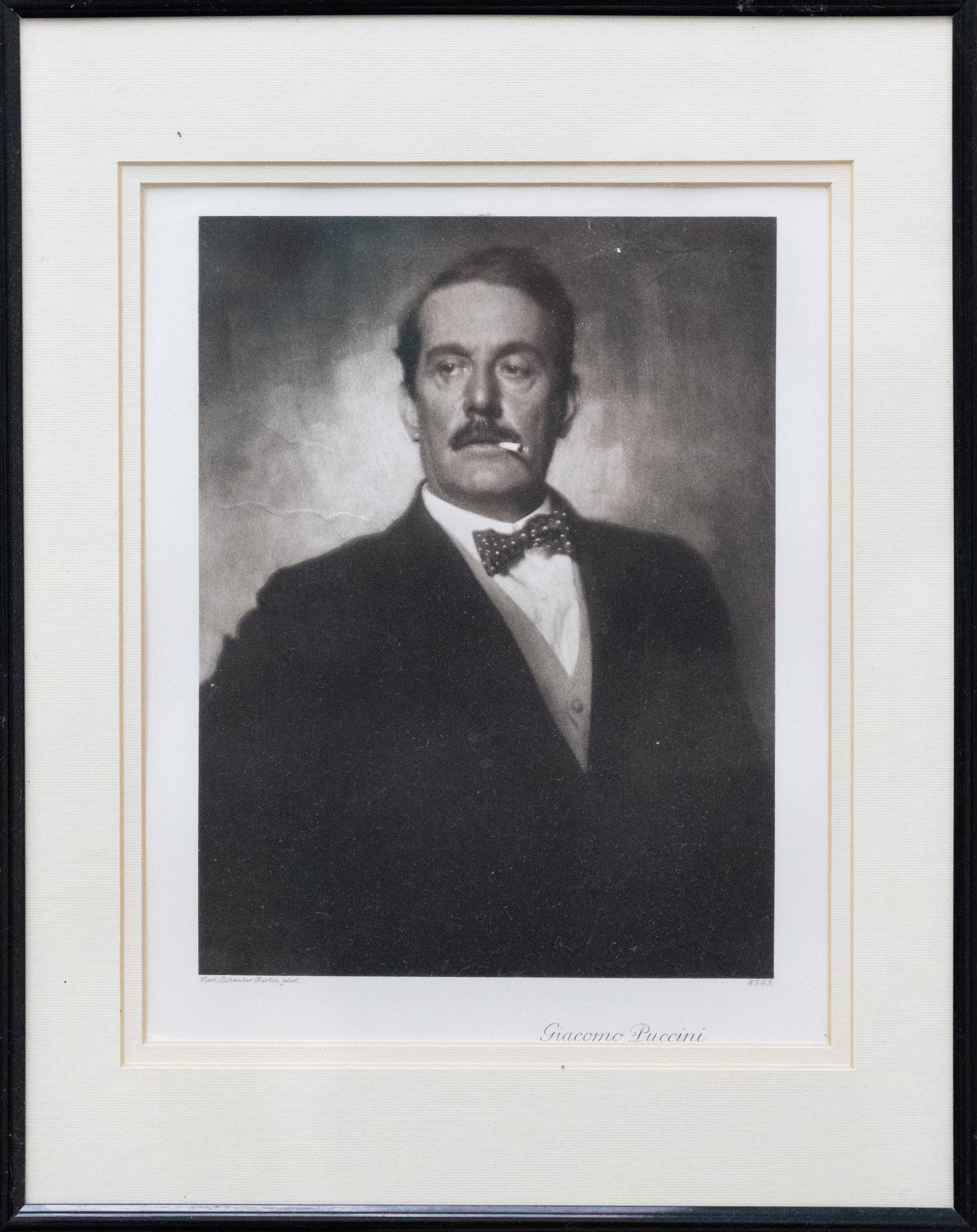
Born into a musical family, he composed his first opera at age 25. He ran off with Elvira Gemignani, who was married to another man, and they had a child. They eventually married, but Puccini had a roving eye, driving his wife mad with jealousy. His brilliance, though, was undeniable. Puccini wrote 12 operas and made extensive revisions to all but the unfinished Turandot, including at least six different versions of Madama Butterfly.
But perhaps no work caused him to furiously mark up pages more than Edgar, his second stage work and his first full-length opera. When Puccini’s publishing house Casa Ricordi commissioned Fairtile for a critical edition of it in late 2002, and she began working on it in 2003, she knew she had a challenge.
“People have always said it was impossible because of all the changes that he made and ... because there were so few sources,” Fairtile said. “Two of the four acts were lost from his score. So, we thought, ‘How are we going to do this?’”
“May God protect you from this opera”
Edgar tells the tale of a medieval knight torn between his love of the innocent Fidelia and the wild and sensual Tigrana. It opened to tepid reviews in 1889.
“The plot is really strange, but it's valued because people can hear his potential in it and also because he took some bits of it and put it in his later operas,” Fairtile said.
Unhappy with the work, he constantly tweaked it over the years, even cutting the final act. By the time Edgar was performed in Buenos Aires in 1905, he was done with it.
“He wrote something very funny on a score to a friend of his, ‘E dio ti guardi da quest'opera’ — ‘And may God protect you from this opera,’” said Fairtile, who was gifted a T shirt with the message on it.
Fairtile had her own frustrations with the piece. For Act 2, only some orchestrations survived, and for Act 4, there was only a piano score. She worked closely with the publisher, drawing from its archive of Puccini’s notes, correspondence, and scores to extrapolate the missing elements.
Then, when the reconstructed piece was just about ready to be performed, Puccini’s granddaughter discovered the two missing acts in her collection.
“I wanted to jump out of a window,” Fairtile said, with a laugh. More editorial work for her followed, ultimately culminating in the 2026 edition.
When a four-act version of Edgar based on her in-progress scholarship premiered at the opera house in Turin, Italy, in 2008, Fairtile was there, viewing it from the special box once reserved for royals. As the lights on the grand chandelier dimmed and the red velvet curtains parted, Fairtile beamed.
“It was unbelievable,” she said. “I was a composer as an undergrad, and so I know how it feels to have your pieces performed. It almost felt like this was, in some way, my piece too.”