
It’s showtime for these University of Richmond interns, with help from the Richmond Guarantee
STUDENT EXPERIENCE
Three Spiders brought their business and organizational skills to arts organizations this summer in Texas, Virginia, and Maryland with support from University of Richmond Summer Fellowships.
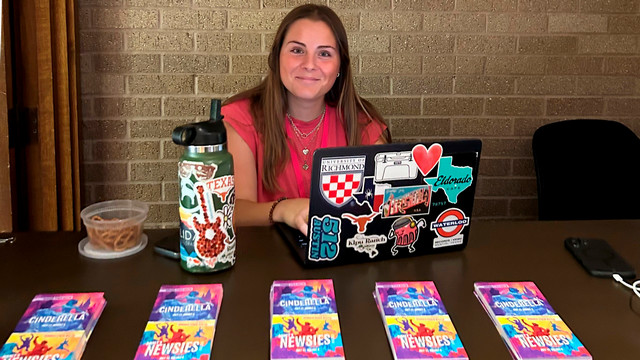
Long rehearsals and bright spotlights on stage have been a part of Sophia Dahlberg’s life since she was 5. This summer she took on a behind-the-scenes role as an assistant company manager at the nonprofit Summer Stock Austin, a tuition-free theatrical program for high school and college students.
“Theater has always been something that I’ve felt really passionate about, both as a creative outlet and as a form of self-expression,” Dahlberg, a sophomore and member of the UR Players and Subject to Change troupes on campus, said. “I can definitely see myself working in the performing arts after college.”
At Summer Stock Austin, she helped with three shows: Newsies, Cinderella, and Sneak Peek, a musical variety show. In productions, even the smallest detail matters. One day, she helped coordinate a carpool for a student whose family was having a hard time getting him to and from rehearsals. At the end of each day, she sends out a notice laying out the schedule, location, and announcements for the next day.
“This job has really forced me to up my organizational skills,” she said. “I have so many different spreadsheets and Google Docs with so much information about everyone in the cast. ... I've met some awesome people that have never failed to make me laugh and make all the long days worth it. It’s been amazing to see these shows come to life.”
Chris St. John wore many hats interning with Host of Sparrows Aerial Circus in Richmond. “Every day brings new opportunities and new challenges to overcome,” he said during the internship.
The company offers classes and workshops and partners with nonprofits such as the Virginia Commission for the Arts to bring circus arts programming to a wider audience. St. John, a senior majoring in leadership studies and philosophy, politics, economics and law, helped with both the business and artistic sides of the company.
“I have worked on theater productions in the past and have always enjoyed the spectacle that art is able to provide people with careful planning and a sufficient amount of grit and creativity,” he said.
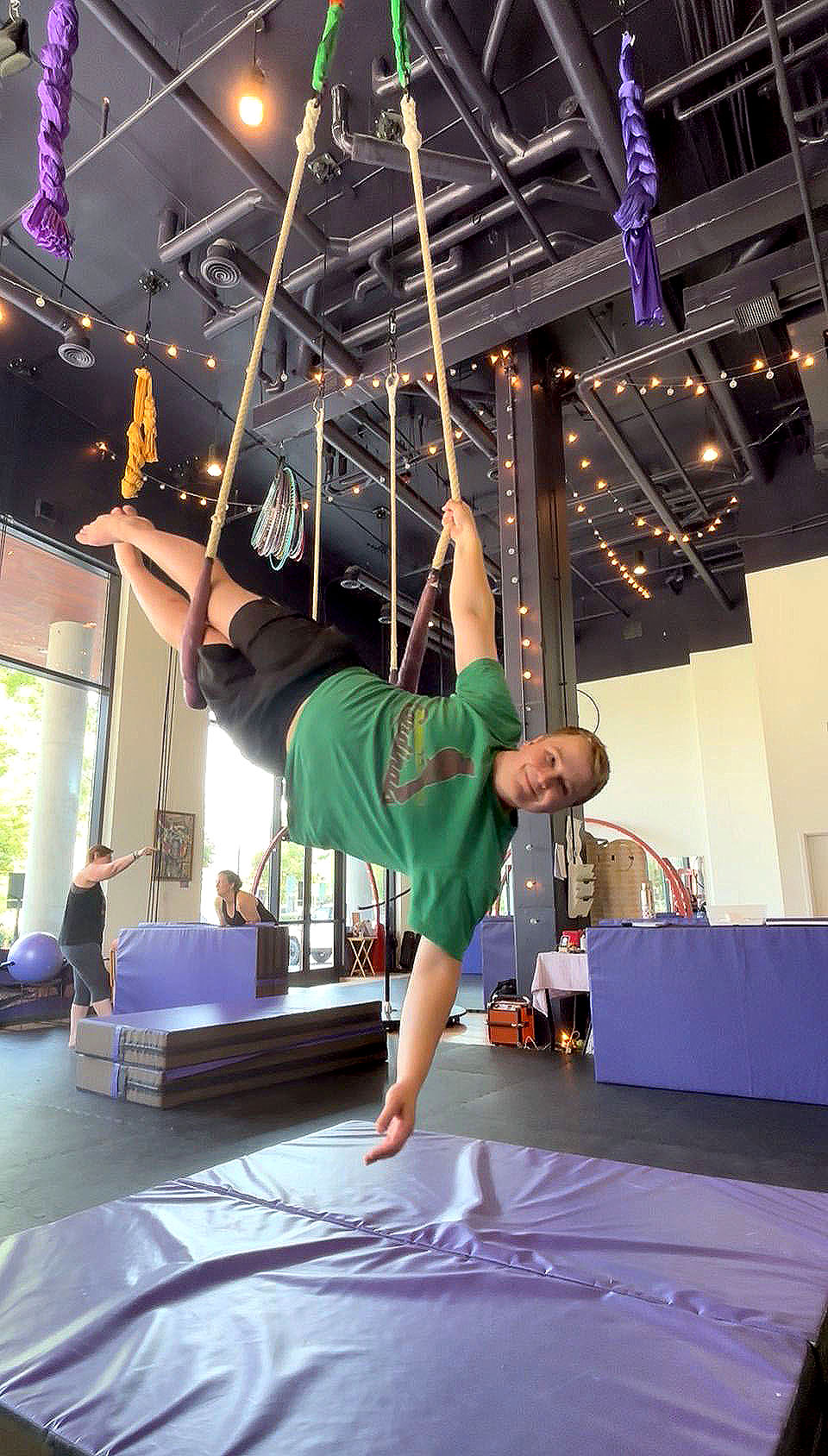
With Host of Sparrows, he organizes community events, manages the stock of merchandise, and writes grant proposals. He also helps with classes and has received training in rigging and risk management from circus industry professionals, including participating in rescue scenarios. He’s even tried out the silks.
“When you wrap the silks around your ankles and climb, your mind goes completely quiet,” he said. “Every muscle in your core and arms burns, but that physical strain brings a strange clarity. ... It is a terrifying, beautiful freedom where one finally feels entirely present in one's own body.”
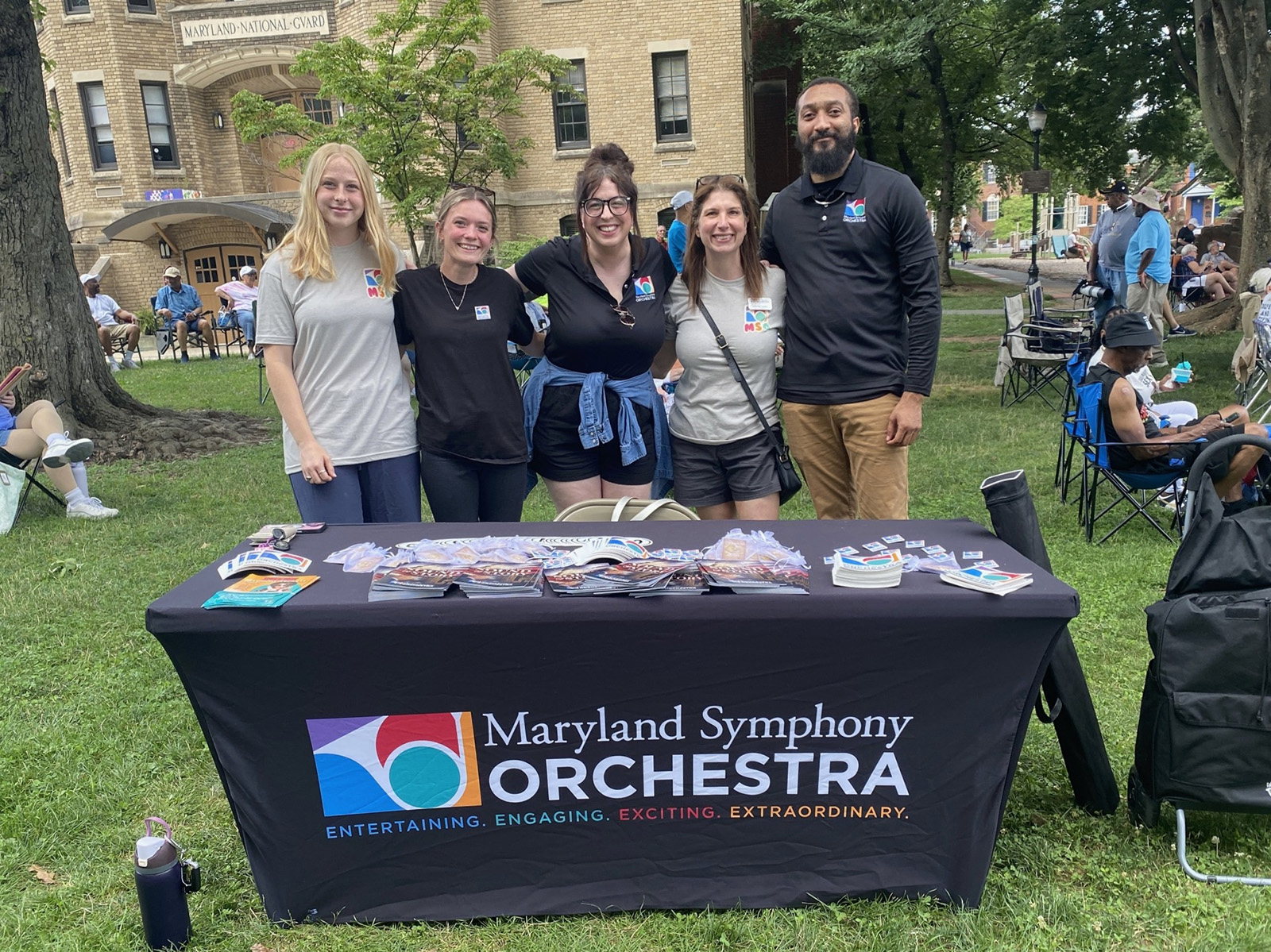
Nora Smith, left, volunteering at the Frederick Summer Concert Series.
Nora Smith worked with the Hagerstown-based Maryland Symphony Orchestra. It builds on her experience on campus taking saxophone lessons and music classes and playing in UR’s jazz ensemble.
MSO “is a multi-million-dollar orchestra run by a team of six people,” Smith, a junior majoring in economics and leadership studies, said. She interned with the one-person fundraising and development team.
“I've learned that building relationships is one of the most important things you can do at a nonprofit this size,” she said. “There are frequently subscribers and donors in the office, and most of the staff have personal relationships with them. People are much more inclined to support the orchestra — however they can — if they feel known and welcome.”
She helped plan the symphony’s annual gala, including its fundraising and marketing. She edited a donor database and conducted a donor analysis of the giving levels, which she presented to several committees.
With the main orchestra’s season is not in session, she volunteered at a Maryland Symphony Youth Orchestra performance.
“I have really enjoyed building connections with the people who are involved in the orchestra,” she said. “It's such a supportive place that has really given me the opportunity to learn and grow.”