
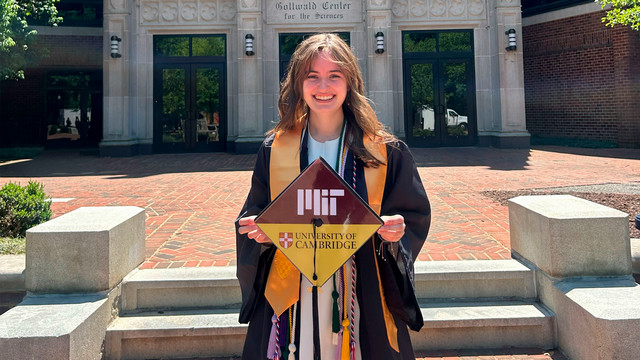
The next stop for some members of the University of Richmond Class of 2026: Top graduate schools
ALUMNI
Each year, the University of Richmond’s distinctive educational experience inspires some students to continue their education with advanced degrees. Here are five recent graduates who are pursuing further studies in climate and sustainability engineering, film production, mathematics and theoretical physics, data journalism, and public health.
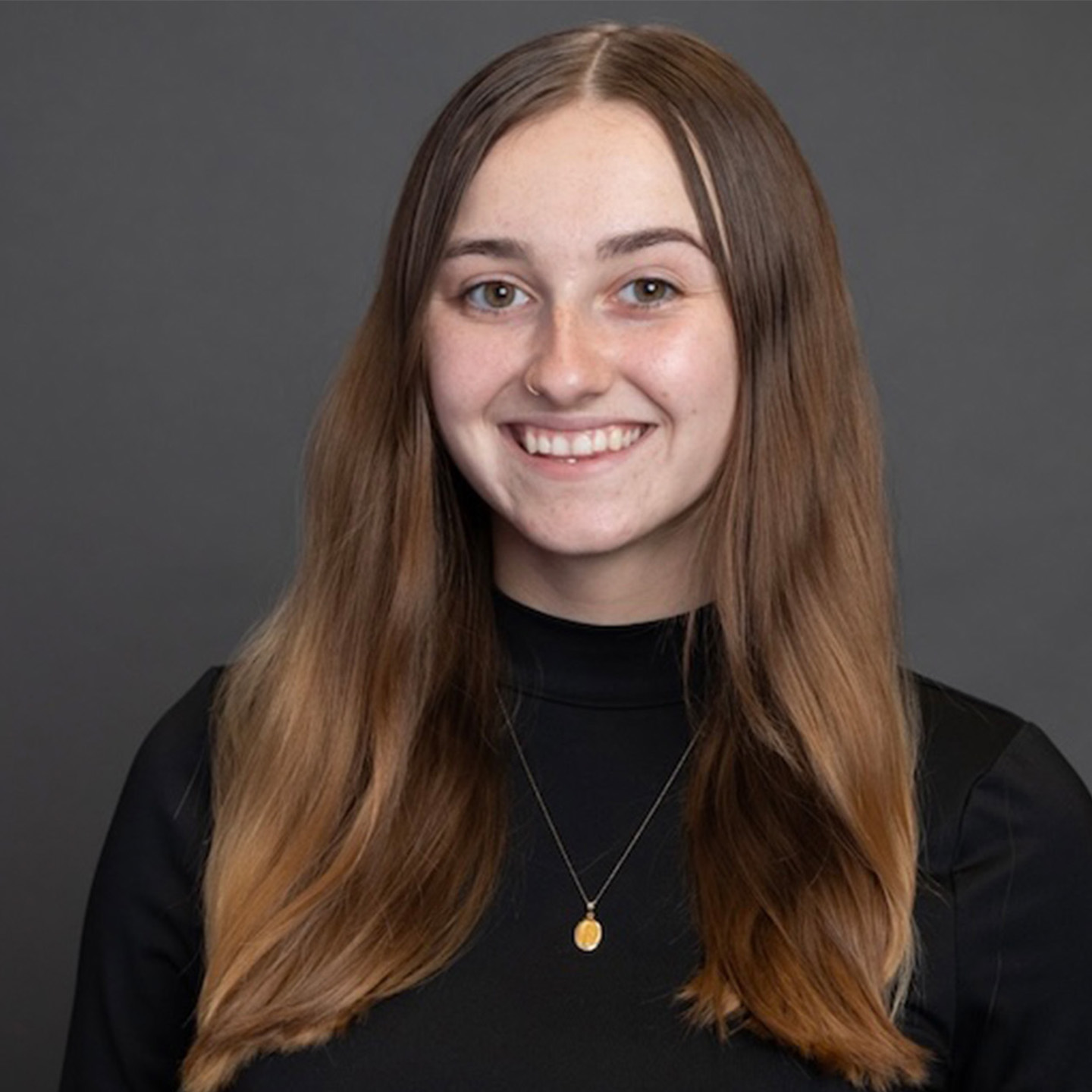
Maddy King — School of Arts & Sciences
Hometown: Huddleston, Virginia
Majors: Environmental studies; Geography Minor: Data science and statistics
Plans: Master of Engineering in Climate & Sustainability Engineering, Duke University
Maddy King’s grandfather was a role model for her growing up. He was an environmental systems engineer for NASA. She is also taking an engineering path. Hers will focus on developing solutions to global environmental challenges such as climate change, renewable energy, and sustainability.
“The Duke University program will allow me to continue building upon my undergraduate experiences while expanding my engineering and analytical skill set,” she said.
During the fall of her sophomore year, she took Spatial Analysis Lab director Kyle Redican’s Foundations of GIS course, where she first learned how to create and analyze maps using geographic information systems.
“Because geography courses were not offered at my high school, the class completely changed the way I understood the relationship between people, place, and the environment,” she said. “Through GIS, I was able to explore connections between issues such as environmental inequality, land use, and socioeconomic disparities.”
The following semester, Redican invited her to work as his research assistant, studying how geographic data inequality affects communities in both rural and urban areas. That opportunity opened doors for her, including presenting research at national conferences, receiving a departmental research award, and being selected for a senior fellowship.
During her fellowship, she helped build an interactive mapping website through the Unpacking the Census program that visualizes spatial and temporal changes in socioeconomic and demographic variables across the Greater Richmond region.
“Much of my undergraduate research focused on how the American Community Survey influences government funding and resource allocation in low-income and urban communities, particularly how poor data quality can reinforce systemic geographic inequities,” she said.
The resource will be used by classrooms, researchers, and local organizations to better understand trends involving migration, housing, food assistance, and other important community indicators.
“What I will miss most about UR is the Department of Geography, Environment, & Sustainability,” she said. “More than the subject itself, it was the sense of community within the department that inspired me to pursue geography.”
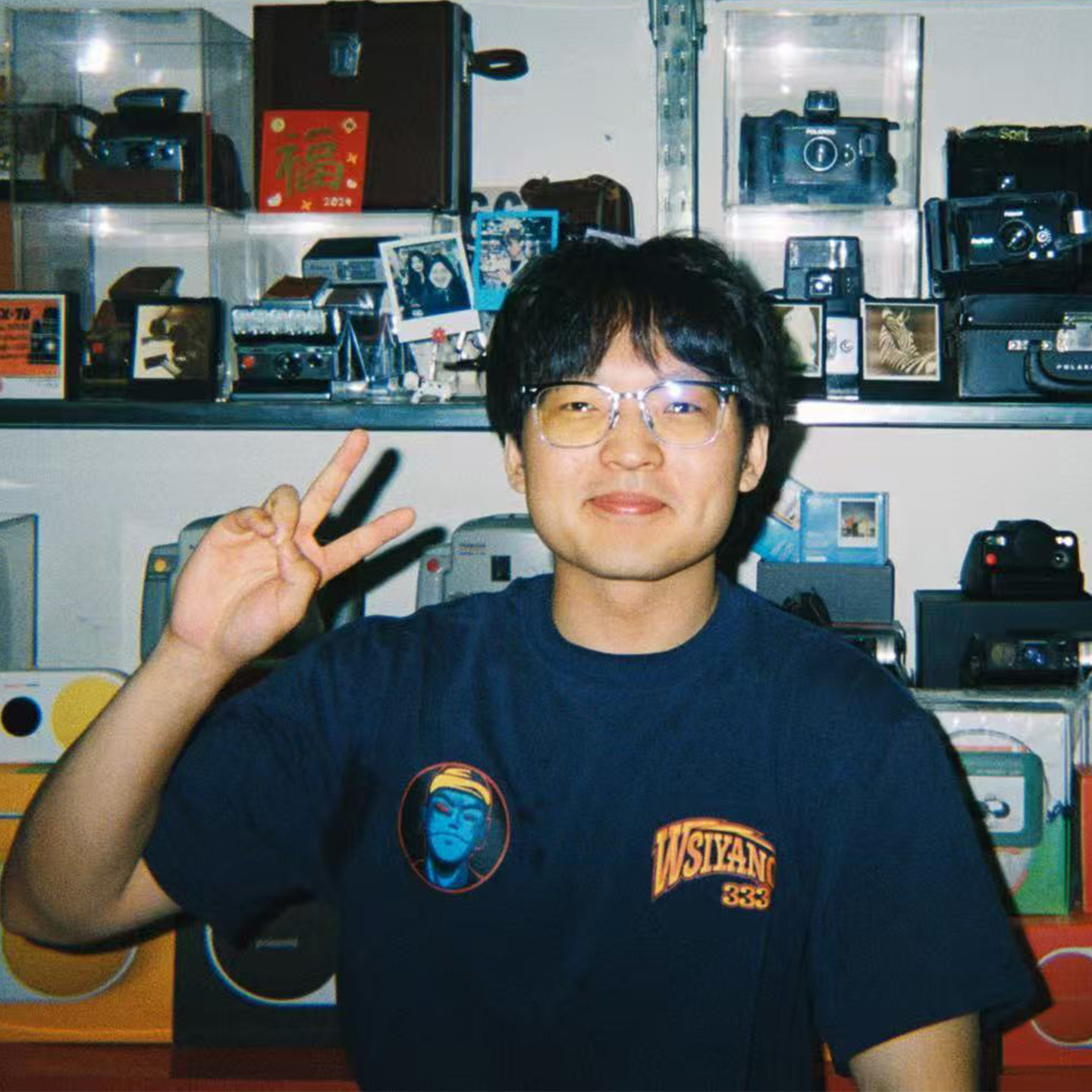
Xiwei Gu — School of Arts & Sciences (December 2025)
Hometown: Wuxi, Jiangsu, China
Major: Visual and media arts practice Minor: Film studies
Plans: Master of Fine Arts, Peter Stark Producing Program, University of Southern California Cinematic Arts
Xiwei Gu thought he might major in journalism at UR, but an Introduction to Film Production class with Sonja Bertucci sent him in a new direction.
“What fascinated me was that film could be just as powerful as journalism in shaping how people think and feel,” Gu said. “It allowed me to explore social issues, personal experiences, and larger questions through stories and images.”
Filmmaking grew from a casual interest to something he realized he could seriously pursue. He thrived in Richmond’s supportive environment, which made it easy to take creative risks, share unfinished ideas, and be vulnerable in ways that helped him grow as a filmmaker and person.
Gu enjoys exploring his ideas through narrative and genre films and transforming his thoughts into stories that others can connect with emotionally.
“Whether the setting is realistic or imaginative, I’m always interested in the human experiences underneath the story,” he said. “Many of my projects are ultimately about people trying to find their place in a changing world.”
Sometimes the world can seem chaotic, “like catkins in Beijing,” he said, referring to the clouds of airborne, downy seeds released each spring by millions of poplar trees in the city. “It needs a time to calm down until we can see it clearly again.”
After graduating early in December 2025 and returning home to China, Gu felt some of that uncertainty as he considered his career path. Currently, he is working in advertising production. He considered starting his own business but opted instead for graduate school.
“One of the reasons I was drawn to the Peter Stark Producing Program is that it reminds me of what I valued most about Richmond: small classes and close relationships,” he said. “With a cohort of only about two dozen students, the program creates an environment where people can genuinely get to know one another and learn from each other.”
Gu appreciates that the program teaches not only storytelling, but also the business, leadership, communication, and problem-solving skills needed to bring projects from concept to reality.
“I don't see creativity and business as separate worlds. Whatever direction I ultimately take, I hope to keep creating things that connect with people and bring ideas into reality.”
Mariona Giner Mascarell — School of Arts & Sciences
Hometown: Benicarló, Castellón, Spain
Majors: Physics; Mathematics
Plans: Master of Mathematics, Cambridge University, followed by Ph.D. in Theoretical Astrophysics, MIT
Mariona Giner Mascarell became fascinated with physics at the age of 8 when watching the TV series The Flash. The scientists on the show talked about particle accelerators and other exotic terms. She began looking them up on Google and was hooked.
“I had so many questions I figured I’d need a lifetime to answer them all, so that’s when I decided I’d become a physicist,” she said. “My love for math came later, when I realized that the only thing more beautiful than the universe itself is the language in which its laws are written.”
During her time at UR, she completed three years of independent studies and an honors thesis with Jeremy LeCrone on mathematics that describe black holes. She will learn more about them during her master’s year at Cambridge. At MIT, she’ll study the origin of primordial black holes, which were created by the Big Bang.
“I love black holes!” she said, stretching out the word “love.” “To be more precise, I love the theory of general relativity, which describes gravity and therefore black holes. I find it to be the most mathematically beautiful thing in the world.”
MIT has always been her dream school, and she was elated in the summer of 2025 when she got into the university’s summer research program, where she studied astrophysics.
Linear Algebra was an important class for her at UR, as it introduced not only to the world of abstract math but her mentor, LeCrone. She was in his independent studies class when she learned about her acceptance to the MIT doctoral program two days after her acceptance to Cambridge.
“I literally fell out of my chair,” she said. “I was shocked. I hugged LeCrone, thanked him for having made that acceptance possible and started crying and Facetiming my parents and all my friends.
“It felt like I was floating on a cloud of happiness.”
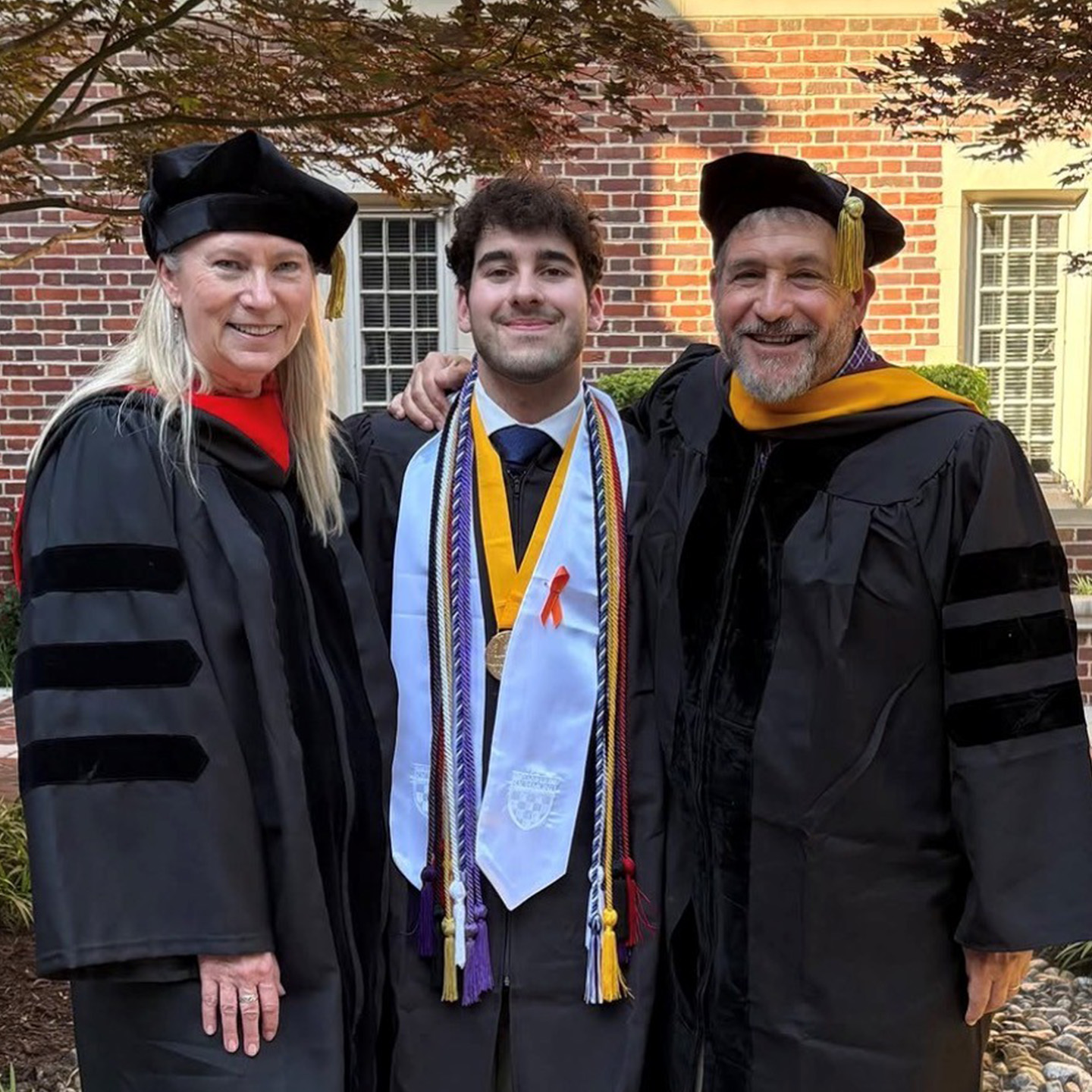
Nick Mossman with his mentors, journalism professors Betsy Mullen and Tom Mullen
Nick Mossman — School of Arts & Sciences
Hometown: Carver, Massachusetts
Majors: Journalism; Latin American, Latino, and Iberian studies; Political science
Post-graduation plans: Master of Science in Data Journalism, Columbia Journalism School
Nick Mossman arrived at Richmond knowing he wanted to study a mix of political science and journalism. A First-Year Seminar on civic journalism and social justice with his faculty advisor Tom Mullen had a profound impact.
“I fell in love with that class,” said Mossman, who went on to become editor of The Collegian. “It went over all the fundamentals of how journalism can shift policy and create social change, which to me was really impactful.”
He found his calling in a data journalism class, where he learned about reporting with an emphasis on charts and other visualizations.
“I like to tell people that my dream job is to do what Steve Kornacki [of NBC News] does on election night and break down the big electoral map,” he said.
Mossman got a taste of that in an election campaign class during the 2024 presidential election. He stayed up until after midnight with the broadcasting class, making predictions and explaining the Electoral College on the large “Moss Map.”
“I’m such an elections nerd,” he said. “I could probably talk for hours about any election.”
As graduation approached, he followed his love of learning. He was accepted to a handful of doctoral programs in political science and master’s programs in journalism. He was elated to receive a full scholarship to Columbia.
“My dad and I shotgunned up there and we toured the campus,” he said. “It was my first time to New York City.”
He looks forward to learning new technologies and to immersing in the news world.
“There’s an eight-story building dedicated to journalism there, which is insane.”
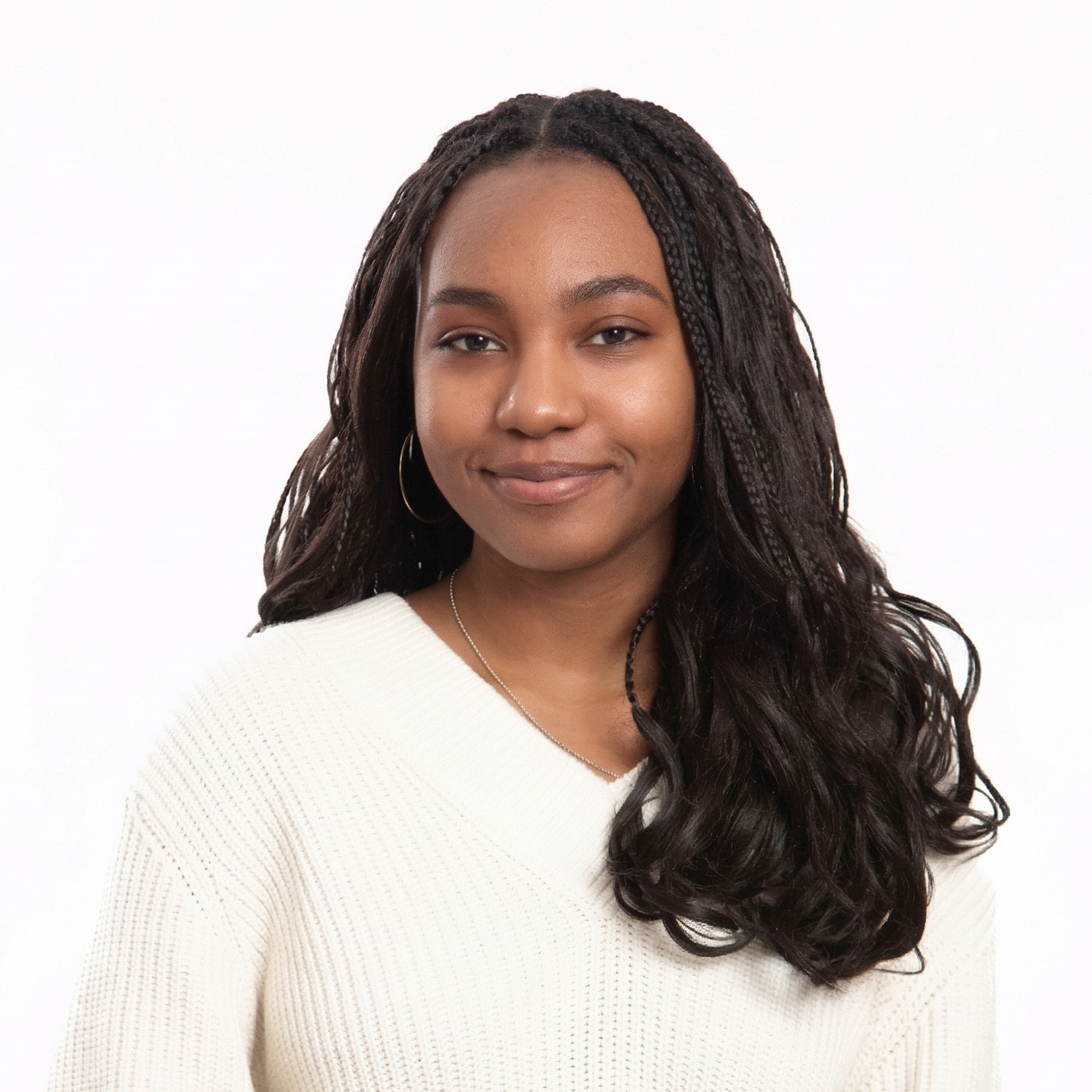
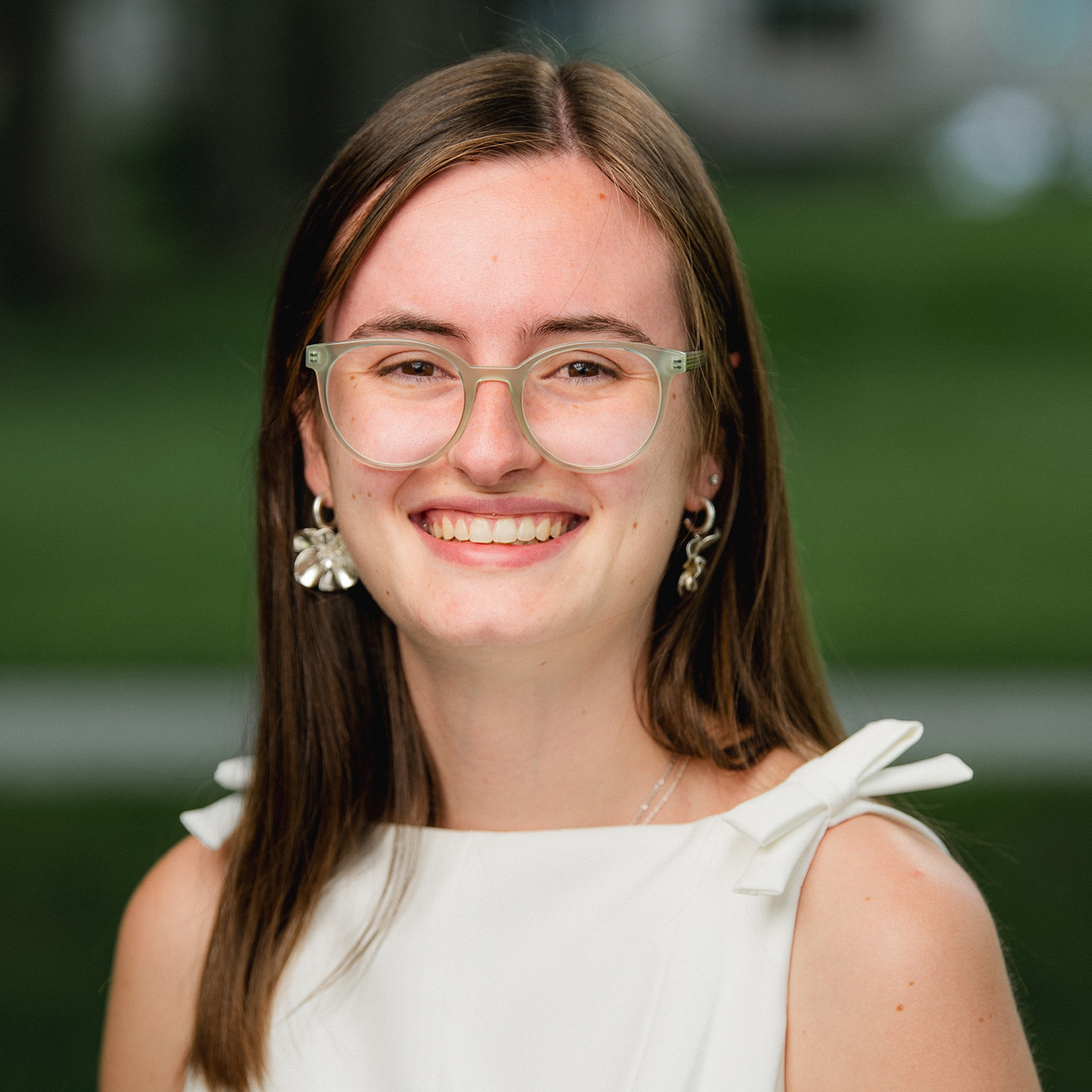
Gabrielle Sylvester — School of Arts & Sciences
Hometown: Broadlands, Virginia
Majors: Health studies; Psychology
Post-graduation plans: Master of Public Health, University of Michigan
Gabrielle Sylvester started college focused on becoming a psychologist. But beginning her sophomore year, she felt drawn to public health out of a desire to have a wider impact.
“I set up a meeting with Dr. [Rick] Mayes about health studies and what the major entails and can provide, and I added a health studies major that same day,” she said.
That year, she also attended an A&S NEXT conference, where she worked on a healthcare case that gave her practical experience in the public health field. A later internship with Alexandria-based REPRO Rising Virginia proved foundational to her learning.“Something I will always remember about my time at UR is the support I received and relationships I built with friends, faculty, staff, and community members,” Sylvester said.
As graduation approached, she wanted to continue her studies.
“Going to grad school gives me the opportunity to continue engaging in research with faculty, learn from seasoned professionals in the field, and continue figuring out where exactly I want to land as a public health professional myself,” Sylvester said. “I also really love the University of Michigan’s program and quality of professors.”
She will concentrate on health management and policy and plans to also complete Michigan’s Graduate Certificate in Health Informatics.
“I am still a little uncertain, but I know that I want to continue conducting research and want to influence health policy,” she said. “I am most interested in healthcare consulting or working as a policy analyst for a think tank or similar organization.”