
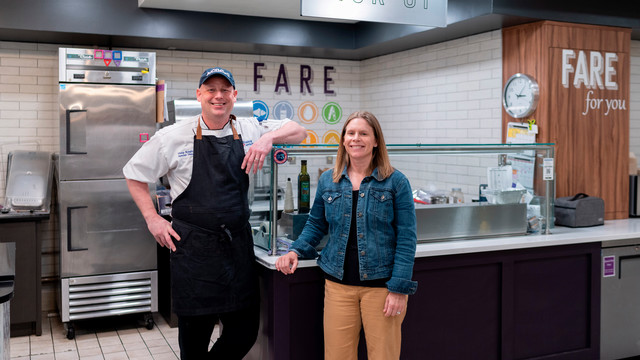
Dining hall solutions for sensitive eaters at the University of Richmond
Campus Life
Campus special diets program caters to student safety by creating meals for those with food allergies.
What does it take to create a home away from home? Philip Knight, special diets chef, and Karen Hensley, senior registered dietitian, believe one of the most important steps is providing a comfortable and safe dining experience. They manage the special diets program, which ensures that students with food allergies, intolerances, celiac disease, or other dietary needs are given nutritious meals without worrying about cross-contact.
“This is the first time that someone else is cooking for [students] besides their parents or guardian,” Hensley said. “Having a special diets program can alleviate anxiety or fears the student might have being away from home.”
To enroll in the program, students submit an accommodation application to the Office of Disability Services. Once the request is approved, the student meets with Hensley to discuss how the program works before deciding if they want the special diets meals prepared by Knight. In fall 2025, 25 students participated in the program, reflecting a steady increase each year.
At Fare, the special diets station in D-hall, Knight operates on a four-week cycle of lunches and dinners. He researches and designs recipes over the summer, and Hensley checks to ensure that any allergies beyond the top nine allergens and gluten are eliminated. Students can pick up lunch starting at 11:30 a.m. and dinner at 5 p.m., and they have all-day access to a pantry and fridge with food items to complement their meals and snacks.
“We want them to feel comfortable and be able to eat and nourish themselves because they’re here to get an education,” Hensley said. “Proper nourishment supports both the mind and the body, which is essential for academic success.”
Knight’s role often extends beyond preparing meals. As students stop by to pick up their food, he takes time to talk with them and learn their stories.
“I can tell when they’re stressed, and I offer some fruit or dessert, something to cheer them up and give them a little message of positive reinforcement,” he said.
When Knight accepted the position, he didn’t expect relationship building to play such a significant role. Now, he believes its importance is second only to preparing safe and nourishing food. Through his partnership with Hensley, the special diets program has become fundamental to helping students feel cared for and at home on campus.
“I’m going to treat them like my kids,” Knight said. “That’s how focused I am on making sure they’re getting fed well and they’re not thinking about anything other than their studies here.”