
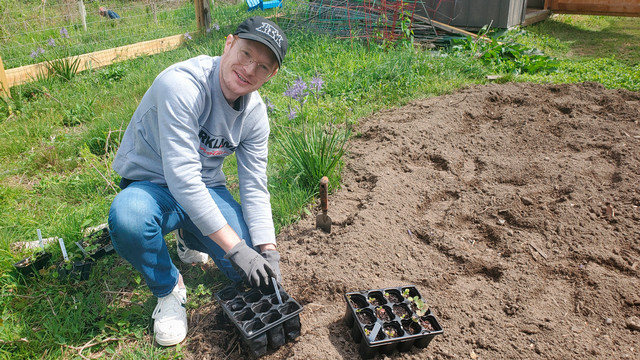
Volunteers dig in for a more sustainable future at the University of Richmond
University News
Digging into the dirt to plant a clump of kale, Philip Schidlovsky said he felt like he was back home, working in his grandmother’s garden. Instead, the first-year student was among a small group planting crops as part of a new Eco-Corridor project.
Natural Areas Steward Joseph Day led students and community members in four “How to Plant a Miniature Farm” workshops in April. The workshops focused on creating a farmette, a tenth-acre growing space in Abby’s Garden. The produce will go to University Catering.
“Besides creating a hyperlocal sustainable vegetable garden that provides produce to our school, our office's goals are to build community and educate,” said Day. “I also believe growing vegetables is a fun pursuit, and I like sharing what I know with others when I get the opportunity.”
Day tilled and prepared the former meadowland before the workshops. The flats of kale were seeded in the Gottwald Center for the Sciences’ greenhouse. Other vegetables planned for the garden include okra, squash, and eggplant.
“This is early Siberian kale. Some people call it headless cabbage,” Day said. “It will be ready pretty quickly, in about 60 days from now.” Crops like tomatoes were planted a week or two later.
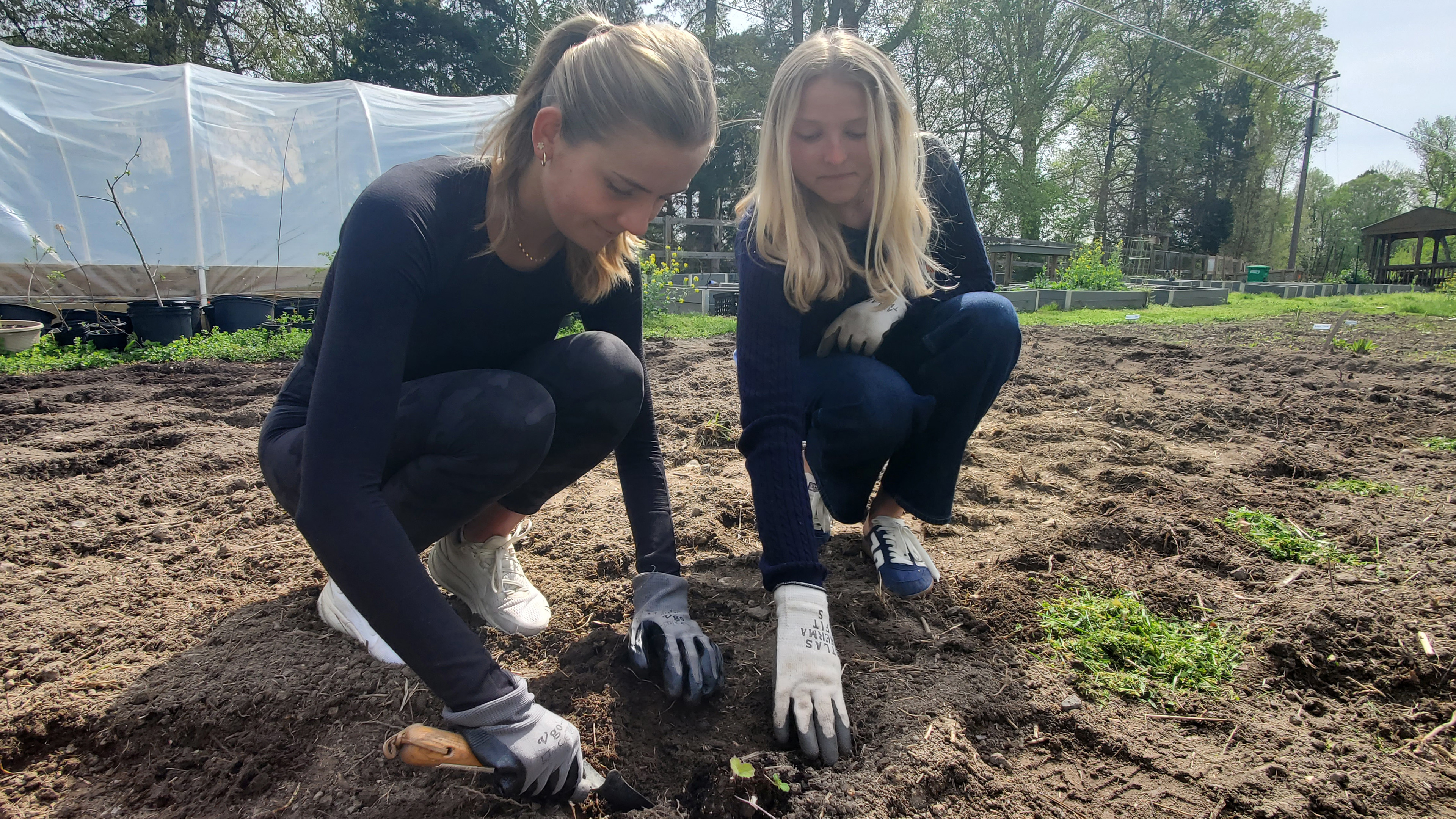
Volunteers followed a string line to plant the flats of kale, spacing them about two feet apart.
“We’re going to carefully lay this in the garden, pack it up to where the roots are supposed to go. Do a soft, but firm, pressing around, and then whisper a gentle word of encouragement,” Day told the group, prompting smiles.
Volunteers placed a light mulch of grass clippings around the plants to add nitrogen to the soil, then watered the plants. The garden is entirely organic.
“We want this to be a learning place, a place for people to enjoy the aesthetics of gardening and crop production,” Day said.
Schidlovsky was among the student volunteers from health studies professor Kathryn Jacobsen’s Global Health class. He saw how the farm activity connected to the course.
“We’re learning about sustainability and about the movement toward producing crops that are free of harmful pesticides, which could help minimize chronic diseases later in life,” he said.
Schidlovsky was excited to see the potatoes he’d planted a few weeks earlier already growing.“It’s awesome to be part of something that’s sustainable and contributing to the community.”