
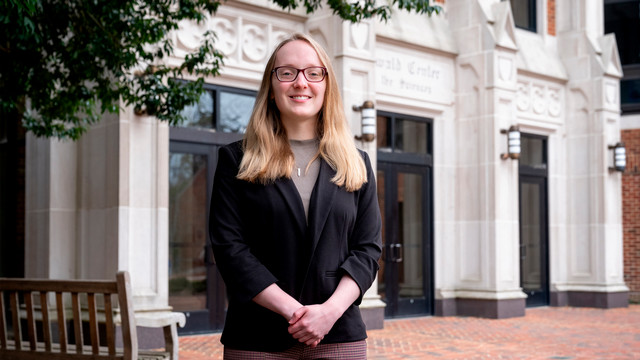
University of Richmond student embraces roles as patient, advocate, and researcher
UNIVERSITY NEWS
Paxton Mills was diagnosed in middle school with a rare platelet disorder that prevents proper blood clotting. The experience set her on a path to help others facing similar challenges.
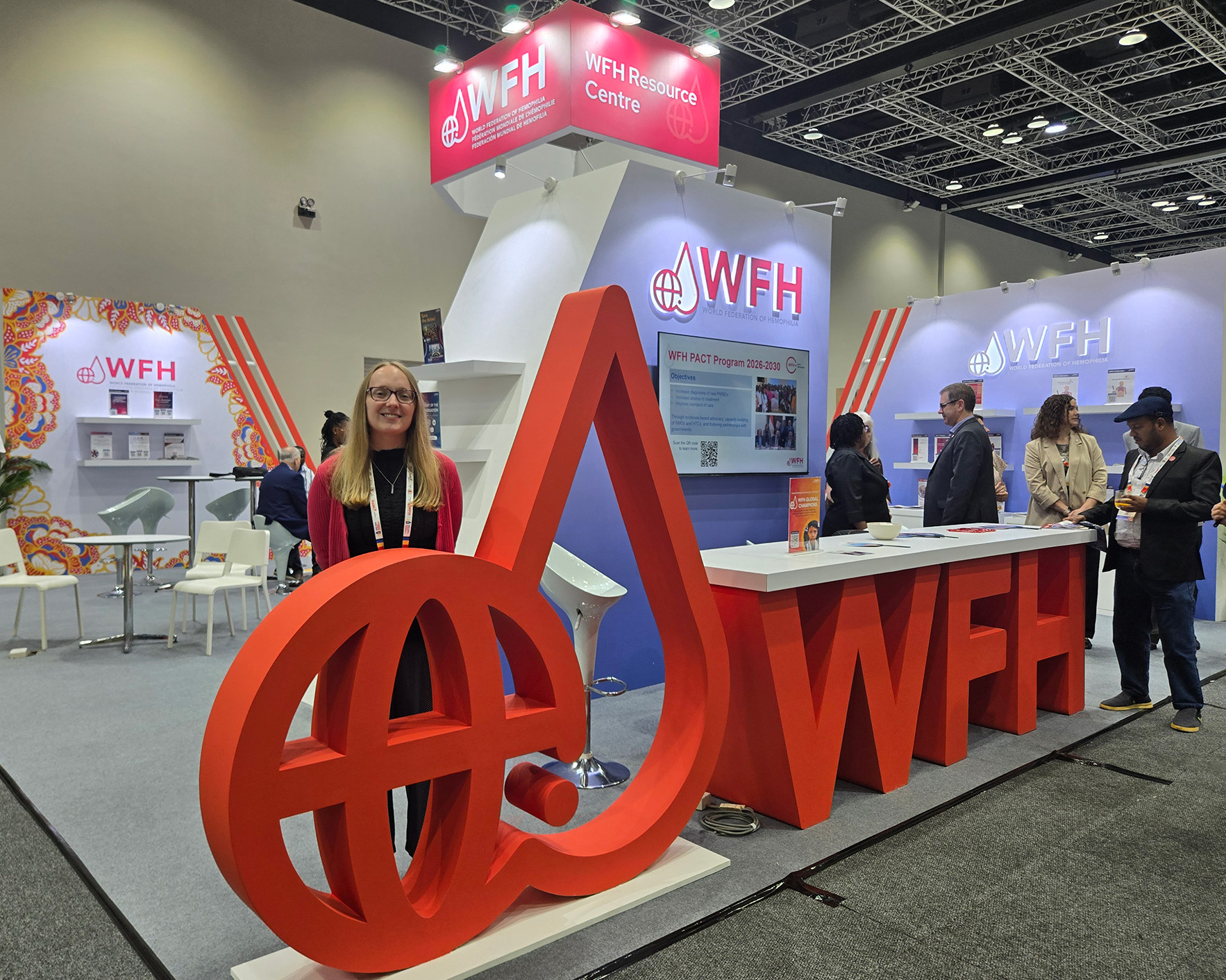
Her work recently earned international recognition. The World Federation of Hemophilia recently selected her for a Susan Skinner Memorial Fund Scholarship — one of only eight recipients in the world.
The scholarship, awarded every two years to women ages 18 to 60, recognizes emerging leaders in the bleeding disorders community. Mills, a biochemistry and molecular biology major who plans to become a hematologist, presented her research at the WFH World Congress in Kuala Lumpur in Malaysia, held April 19-22.
“I was very excited to have that chance,” she said. “I met fellow leaders from over 100 countries, all dedicated to advancing the treatment and care of individuals living with bleeding disorders.”
“The Susan Skinner Award is highly competitive,” said Maria Santaella, senior vice president of research strategy at the National Bleeding Disorders Foundation, who has worked closely with Mills. “This honor reflects Paxton’s demonstrated leadership at a remarkably young age, as well as her meaningful contributions across advocacy, education, and research that advance care and outcomes for people living with inheritable bleeding disorders."
Sharing her story
Diagnoses of rare blood disorders can take years for patients, especially those like Mills who have a condition other than hemophilia. Mills began advocating for patients through the National Bleeding Disorders Foundation when she started college, bringing a broader perspective to conversations about care and research.
“People with rare disorders have historically been overlooked,” she said.
She was encouraged when the organization changed its name from the National Hemophilia Foundation in 2023 to better reflect the wide array of conditions, including hemophilia types A and B, von Willebrand disease, inherited platelet disorders, and other factor deficiencies.
“It sounds maybe trivial, but this slight wording change is so impactful,” Mills said.
Last year, she served as a youth representative on the foundation’s board of directors, contributing to national-level strategic planning.
Research and medical school plans
Through her work with the National Bleeding Disorders Foundation, Mills studies how bleeding disorders affect women and girls — groups often underrepresented in research. That gap can lead to delayed diagnoses, limited treatment options, and poorer health outcomes. “Our research suggests 50 percent of females wait over a decade between the emergence of their first symptoms and ultimately reaching a diagnosis,” she said.
At the University of Richmond, Mills also researches breast cancer and inflammatory disease development in chemistry professor Julie Pollock’s lab.
“I’ve been able to present my research from campus three times at different conferences,” Mills said. “To present all this work and get that hands-on experience is something that I’m very grateful for.”
After graduation, Mills will intern with the Virginia Department of Medical Assistance Services, which administers Medicaid. She is taking a gap year to apply to medical school.
“Working with physicians and advocates and researchers through NBDF has made me see that that's the life that I want to have,” she said. “The experience has energized me to continue to advocate, research, and learn so that we may one day see a cure for bleeding disorders.”