
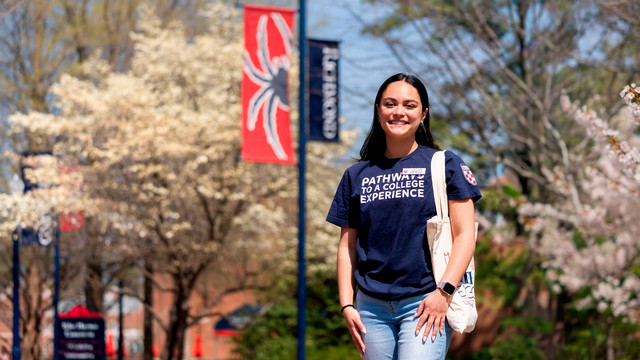
In PACE program, Spiders introduce local students to college life
STUDENT EXPERIENCE
University of Richmond students oversee tour logistics while building their own skills.
This year, more than 400 elementary and middle school students have visited the University of Richmond through the Pathways to a College Experience (PACE) program — and the number is climbing. By year’s end, PACE is on track to welcome more than 600 students from schools across the Richmond region.
Like many campus tours, students visit the library, the Weinstein Center, athletics venues, classrooms, residence halls, and the dining hall. Unlike traditional admissions tours, PACE isn’t designed to recruit students to Richmond. Its goal is broader: to help young people see college — any college — as possible.
“When a student arrives on a college campus, they envision themselves there,” said Jacci Banegas-Abreu, director of the Bonner Scholars Program and associate director of student engagement in the Center for Civic Engagement. “When they walk around, or they see someone that looks like them on a college campus, they think, ‘Wow, I can do this. Someone believes in me.’”
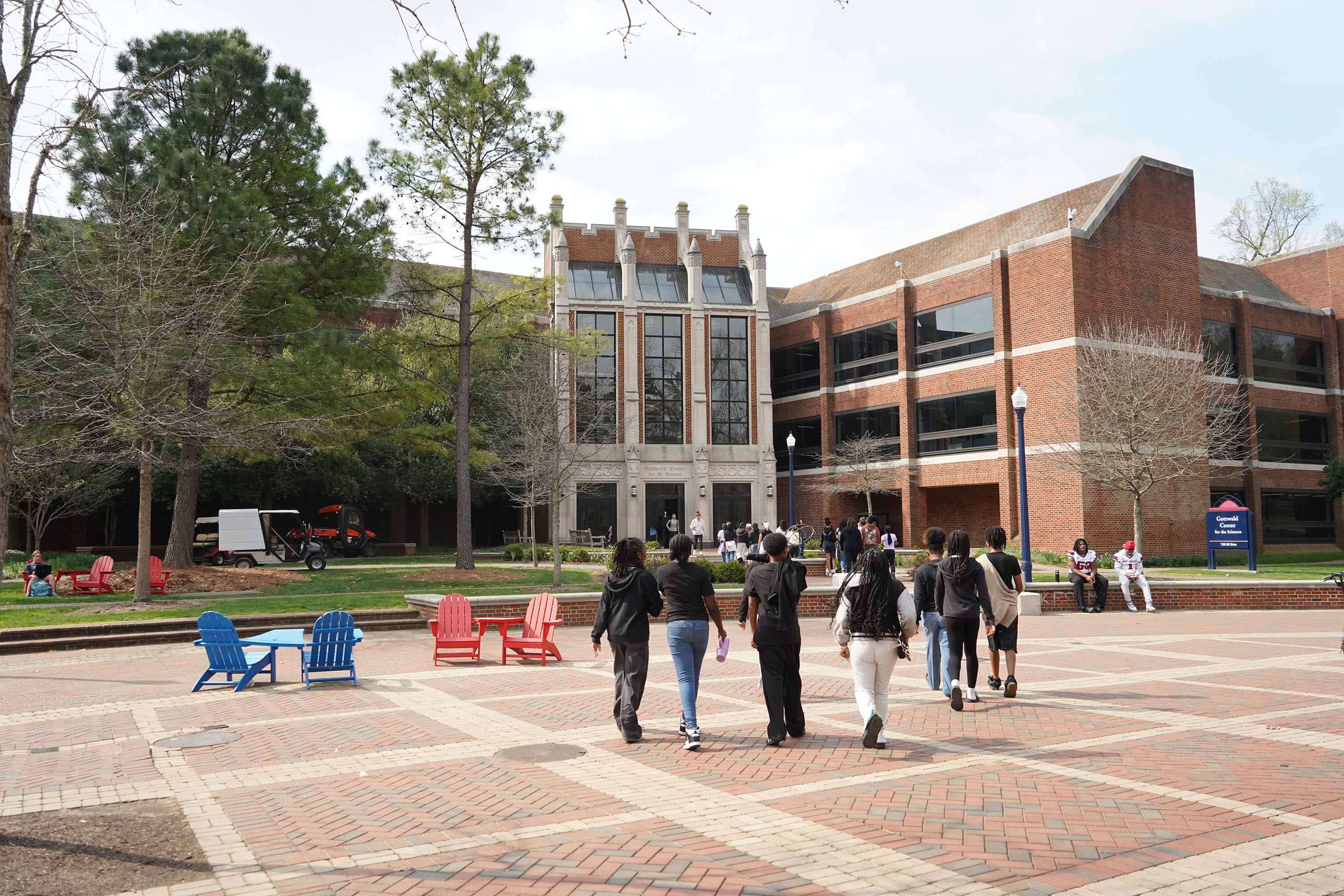
Now in its fourth year, PACE is funded by a grant from the State Council of Higher Education for Virginia and operated by the University’s Bonner Center for Civic Engagement. About 40% of participating schools return each year, with new schools joining through word of mouth.
Since Banegas-Abreu’s arrival in 2024, the program has expanded significantly, including a strategic shift to center Richmond students as leaders. Juniors Isabella Corona and Duncan Hall, and sophomore Lucy Lew, oversee tour logistics, coordinate with schools and campus partners, and manage student volunteers.
“It’s important that Richmond students feel empowered to lead the charge,” Banegas-Abreu said. “When younger students hear from an actual college student about their experiences, it holds so much weight.”
Lew oversees the student staff, including recruiting volunteer tour guides, leading training, and managing their schedules. She checks in weekly with Banegas-Abreu to review upcoming tours and ensure programming aligns with the vision for PACE.
As an education and dance double major, working for PACE has helped Lew build connections to her intended career path. She has met teachers from across the region and spoken with them about their daily lives and the various local school systems. While she aspires to teach younger grades, she’s enjoyed the opportunity to interact with students of different ages.
“I love that the kids still love to learn,” she said. “Every single time, they just soak up all the knowledge like sponges. It’s really fun to see.”
“As much as I love doing PACE tours with middle schoolers, it’s reminded me why I’m focused on teaching kindergarten through second grade,” she said. “There’s something about that open, blank slate [of younger students] that I’m really excited about.”
While Lew manages the Richmond students, Corona meets with school representatives to design their visit experiences, and Hall coordinates with campus partners on their availability for tours.
Corona, who is double majoring in philosophy, politics, economics and law (PPEL) and journalism, said she tailors tours for different grade levels. She helps younger students connect college to their interests and older students understand majors, scholarships, and applications. Hall, a finance and international business management major, initially joined PACE as a volunteer because he enjoyed giving tours in high school and wanted to continue at Richmond. He said his staff role has strengthened his communication and project management skills.
While Banegas-Abreu believes those peer-to-peer interactions are what make PACE so successful, she also sees the value of leadership and professional experience.
For Banegas-Abreu, the program’s impact extends beyond a single visit. “We want to prepare them for their next steps,” she said. “We’re developing future leaders, and they feel that sense of responsibility.”