
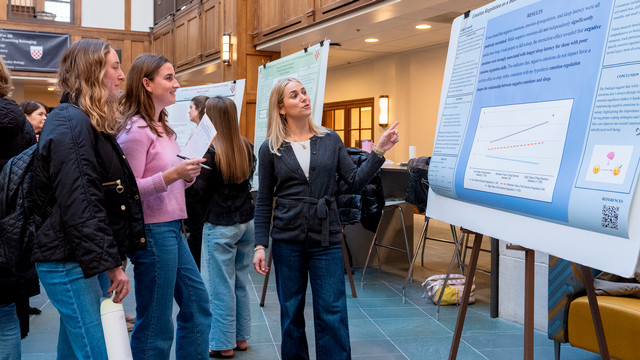
Richmond psych students analyze the mind and well-being connection
Research & Innovation
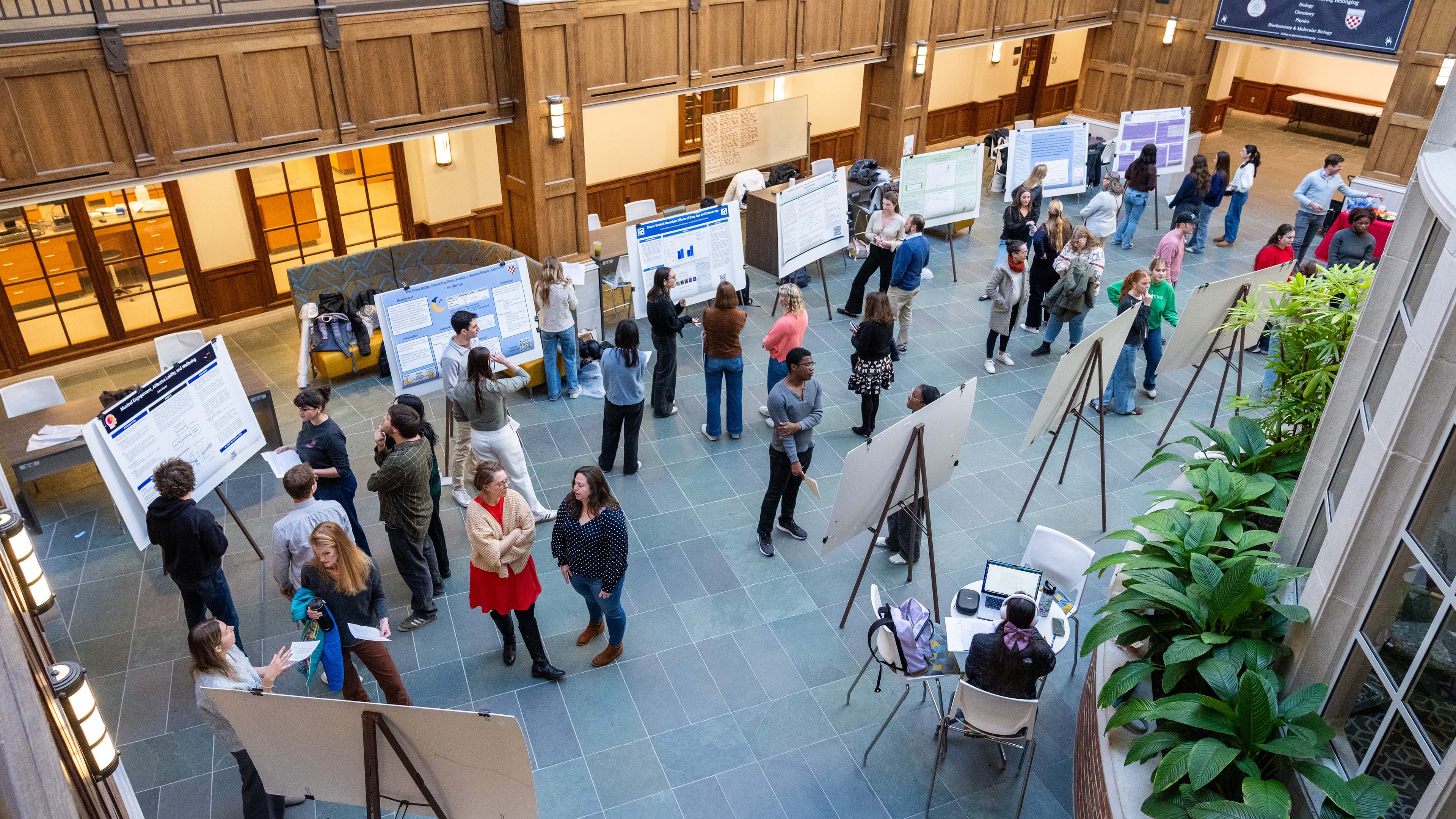
Every December, psychology professor Kristjen Lundberg’s Psych 325 students showcase the results of their semester-long individual research projects at her annual poster event. The course provides an introductory overview of theory and research in affective science, or the science of emotion.
“Today, we are celebrating the work of 24 outstanding undergraduate researchers,” said a beaming Lundberg at the event, held in the Gottwald Atrium. “It has taken 15 weeks to get from the very seed of their ideas to the posters that you see on the boards and the papers waiting behind those QR codes.”
From negative thoughts to restful sleep
Lizzy Cresswell’s new Oura smart ring inspired her research into how negative emotions can affect the time it takes someone to fall asleep. In a self-reported questionnaire, her study participants reported how often they experienced negative thoughts throughout the day, how long it took them to fall asleep, and whether they experienced disturbances before dozing off.
“I also wanted to see how this relationship was influenced by emotion regulation, or how someone manages their emotions to protect themselves,” said Cresswell, a senior double majoring in psychology and leadership studies.
She found that negative emotions during the day only predicted more trouble falling asleep at night among those with poorer emotion regulation skills. Additional research suggested that interventions like mindfulness, practiced breathing, or journaling could aid in that regulation, she said. “Taking one downtime event so you’re not moving from go, go, go to straight to sleep.”
The comfort of remembering
The studies produced surprising results for some students, such as junior Morgan Elliott, who examined the effect of nostalgia on well-being.
“I have music that just takes me right back to specific times in my life, and so I just wanted to explore nostalgia as an emotion,” said Elliott, a business major with a marketing concentration who is interested in the psychology behind consumer behavior.
She believed that feeling nostalgic about the past could negatively affect a person's mental state, but found that the opposite was true — the more nostalgia, the greater the well-being.
“My research showed that the reason for this is that nostalgia can help you connect with others by talking about relatable experiences from your past,” Elliott said. “But it can also help you appreciate where you've come from.”
Social media addiction & diminished pleasure
Saga Martinsdottir, a senior majoring in business administration with a minor in psychology, conducted research to see whether social media addiction is linked to increased anhedonia and ultimately higher levels of depressive symptoms. Anhedonia refers to the loss of pleasure or interest in everyday activities. “Things you once enjoyed — like feeling the sun on your skin or spending time with friends — no longer feel enjoyable,” she said. “It’s a key feature of depression.”
Her research found that a loss of pleasure was strongly associated with depressive symptoms. However, based on a survey of 100 participants, she did not find a clear connection between anhedonia and social media addiction. Martinsdottir said additional research is needed to better understand the relationship.
“The average age of the participants was 40. That participant group isn't going to be as addicted to social media compared to the younger generation,” she said. “It would be interesting to redo this kind of study with a younger group of participants, ranging from 13 to 22.”
Lundberg organized the event to provide students with an authentic research experience. “I thought they were amazing,” she said about this year’s presentations.
Students enrolled in this course face challenges, whether with statistics or study limitations, and begin to doubt themselves, but they keep working, Lundberg said. “And in this moment, where they haven’t given up, they feel a sense of pride and accomplishment,” she said. “I love that moment when they realize they've gained a lot of knowledge about their topic.”