
Artists-in-residence share their expertise with the University of Richmond
Arts
University of Richmond students gain valuable insights from visiting artists, musicians, and writers in residence. After years of refining their craft, these professionals bring a welcomed perspective to campus. Here are three distinguished creatives who worked with students last semester.
Marc Bamuthi Joseph, Spoken Word Artist & Librettist
Marc Bamuthi Joseph, who goes by Bamuthi, is participating in a three-year residency at the University, has a lengthy list of accolades, including former vice president at the Kennedy Center, TED Global Fellow, Emerson Collective Dial Fellow, the first recipient of the Guggenheim Social Practice initiative, and honoree of the United States Artists Rockefeller Fellowship.
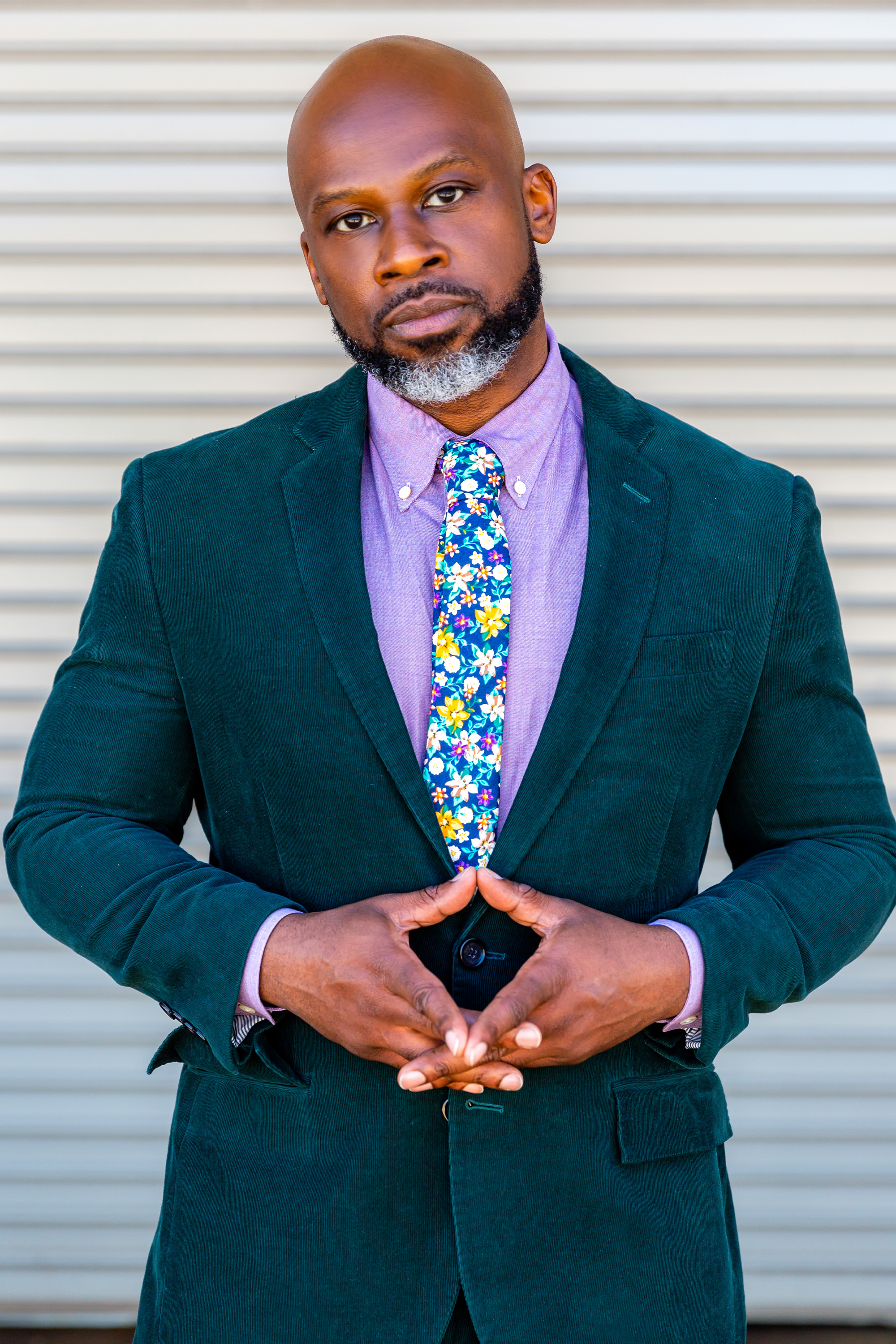
His University of Richmond residency involves multiple visits to campus as he develops a libretto, Remembering Empathy, to be unveiled at UR this spring. The project is being developed with help from students and others on campus through conversations and art.
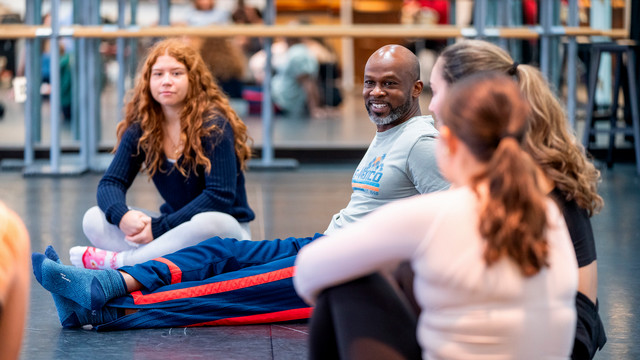
In an advanced contemporary dance class this fall, Bamuthi explored themes of empathy, healing, and discovering one’s own voice as an artist.
“You feel that emotion in your body, and then the dancer’s responsibility is to translate that and make it visible for everybody else,” said Bamuthi, who also has a dance background. “You get to show everyone else how to be free.”
Bamuthi guided the students through a hip hop routine. At one point, he stretched his arms wide and tilted back his head. “Give your chest to the full sky,” he said. “Excellent. We’re alive.”
After they finished the routine, he asked them to imagine someone they would say goodbye to forever. What would they want to say to that person? “I want you to answer this question with your body using the movement vocabulary I just gave,” Bamuthi said. “How does that show up in your fingertips when you stop?”
He asked the students to spread out into their own spaces, noting that it’s difficult for dancers to listen to themselves when they are often responding to specific instructions from choreographers.
Sophomore biology and dance major Julia Nugent enjoyed the experiment. “I feel like, with my focus shifting more towards others and using my emotion to show how I feel, my dancing was driven by those feelings and thoughts, versus something stricter, that would have followed specific steps and counts.”
Mark Lomanno, Ethnomusicologist & pianist
University of Miami music professor Mark Lomanno is an ethnomusicologist, jazz historian, and pianist, and a 2002 UR alum. He returned to campus last November for a weeklong residency to perform with the Little Big Band, rehearse with the UR Jazz Ensemble, and visit music classes, including a salsa meets jazz course.
“He is a great player and model for our students,” said music professor Mike Davison. “Bringing music from the Canary Islands was a valuable performance and cultural experience for the students.”
Lomanno, who double-majored in music and classics at UR, was among the first students to go to Cuba with Davison, host of the UR Jazz Ensemble’s Cuban Spectacular program for the past 20 years. The trip to Cuba during his senior year sparked Lomanno’s interest in global music. “It’s not an exaggeration to say that trip changed my life,” he said. “It was the first time I'd left the country. Musically speaking, I learned more about Cuban music in 10 days than I had in two years.”

While working on his doctorate at the University of Texas in Austin, he discovered a book about the Canary Islands, a Spanish archipelago off the northwest coast of Africa. His studies grew deeper, and he moved to the Canary Islands for a year, where he became familiar with the music — a mix of African, European, and Andalusian influences.
“As an ethnomusicologist, I’m basically an anthropologist who studies music,” Lomanno said. “Ethnomusicologists believe that music is a part of a community’s culture.”
First-year student Lucas Watts had a private piano lesson with Lomanno and performed with him live. Lomanno selected two of the songs in the program from his research. “I am grateful that he came to teach us about music in the Canary Islands because the songs were unlike anything else I've performed,” Watts said. “I don't know how else I would have learned about that music.”
Kathryn Harlan, Writer
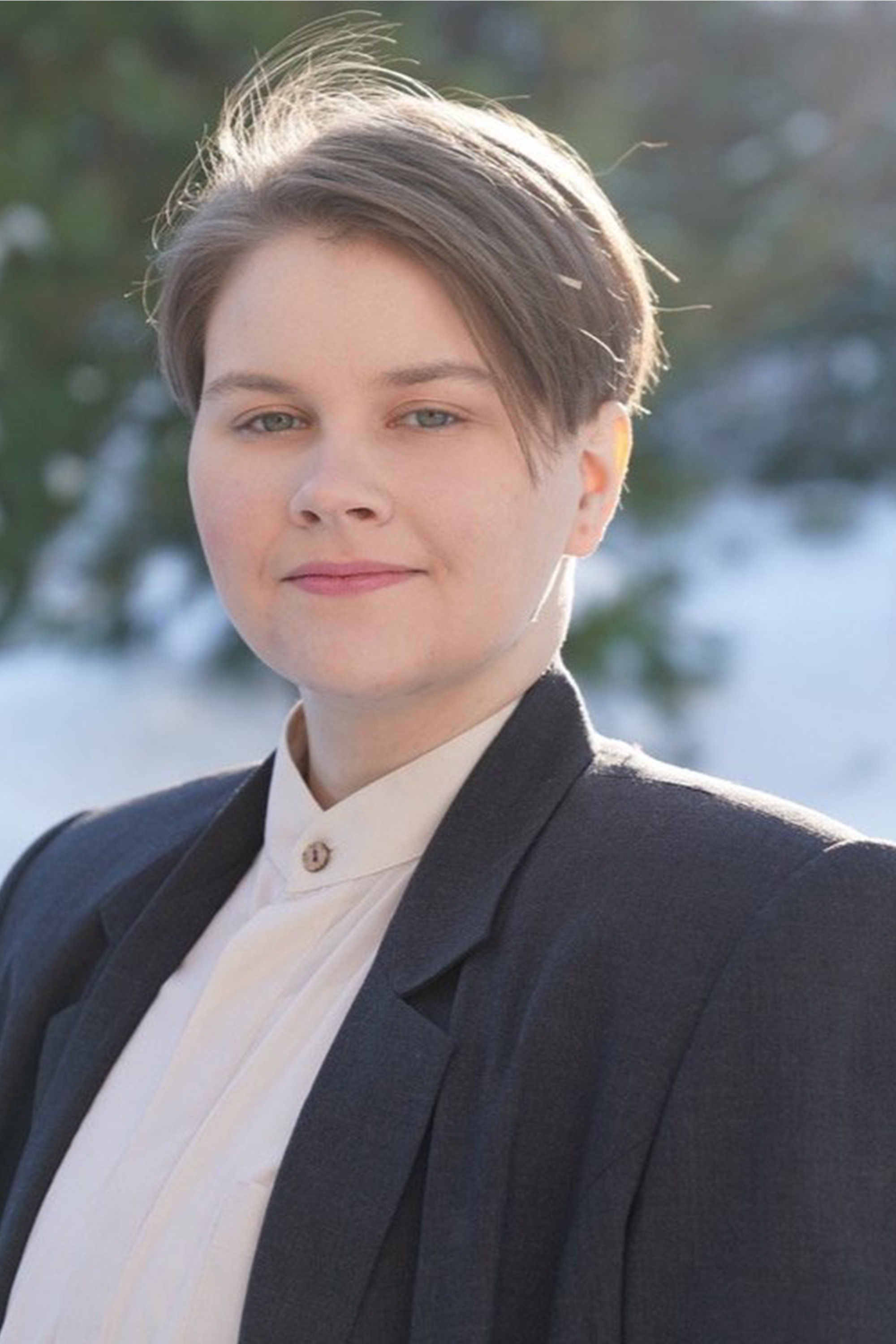
Kathryn Harlan is an author known for genre-bending fiction, often centered on queer characters. She published her debut collection of short stories, Fruiting Bodies, in 2022. A year later, she was named a finalist for the PEN/Faulkner Award for Fiction.
Harlan, a distinguished writer-in-residence, taught an upper-level fiction workshop last semester. “I've been beyond impressed with my students, both their aptitude and their creative range,” Harlan said. “They're some of the most talented and engaged writers I've had the privilege of workshopping.”
In the spring, she will teach Introduction to Creative Writing and Writing Genre Fiction, exploring the craft of science fiction, fantasy, and horror.
One of her favorite writing exercises is to have the students describe something from a character's perspective — such as their bedroom or car — and then share that description with a partner to see what they can guess about the character. The exercise encourages discussion of how to convey character through detail and perspective.
“Professor Harlan always encourages students to experiment with genre or unconventional elements in their writing,” said junior Jessy Taylor, a triple major in creative writing, English, and German studies. “Her instruction has allowed me to step out of my comfort zone by writing everything from literary fiction to sci-fi.”
Harlan enjoys sharing the skills of the craft and tips for becoming a writer that she has learned along the way.
“I hope students leave the workshop understanding that writing is a skill best improved through practice. Publishing is famously a long shot, and it’s very easy to get discouraged when the rejections start piling up,” Harlan said. “As long as you want to write, it is worthwhile to keep writing. Even if you don't yet have the skill to produce the work you envision, trying will only bring you closer.”