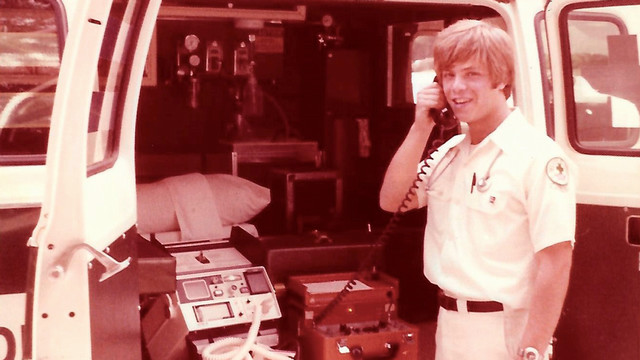
University of Richmond alum retires after five decades as a rescue squad volunteer
ALUMNI
How a teenager from New Jersey discovered his purpose while in college and spent the next 52 years and 2,500 EMT shifts saving lives.
On a sunny January afternoon in 1973, 17-year-old Don Unger sat in the back of a taxi with his father, riding from the airport to the University of Richmond. Unger looked out the window, and the Tuckahoe Volunteer Rescue Squad caught his attention. He could see the ambulances and crash truck parked outside the station. On that day, he made a decision that would guide the next half-century of his life.
He had already been trained as an EMT. The day after his freshman orientation, he hiked the mile into town to the rescue squad station and asked for an application. A month later, he was voted in.
The economics major from the class of 1977 had to learn to balance his many responsibilities. “I wasn’t exactly academically stellar my first year,” Unger said with a chuckle. “I was trying to pledge a fraternity, do my homework, go to basketball games, and volunteer at the rescue squad. But it got better, especially once my parents brought my 10-speed bike with them to parents’ weekend!”
Eager beginnings as a volunteer
Unger remembers long days spent with his Grandma Helen when he was just a boy and his parents were at work. Like most young boys, he was fascinated by trucks, so when Grandma needed to help little Donnie burn off some energy, she would take him to the local fire department.
“She started taking me to different fire stations, and they just let me run around and play on the trucks,” Unger said. “By the time I was 12, I would ride my bike to the station and just try to be useful. I hung around so much that eventually they let me help take care of the equipment.”
By 17, Unger was volunteering in the emergency room of Martland Medical Center near his Newark, New Jersey hometown, witnessing everything from births to shootings. When a new EMT course opened, he applied and was accepted as one of the youngest trainees.
“I wasn’t dating,” he said. “Friday and Saturday nights were spent at the ER.”
On the front line
In the fall of 1975, Unger heard about a life support program class that would be offered at St. Mary’s Hospital in Richmond. It was the first of its kind in the region and could potentially help save people suffering from cardiac arrest.
“I would go to the class two nights a week from 7 to 9, in addition to my rescue squad duties and classwork,” he remembers, “but it felt like the more I did, the better I did in school. It forced me to stay on top of things and be organized.”
Unger finished the training later that year, and in early 1976 he passed the written exam, becoming the 121st advanced life support provider in Virginia. A few months later, Unger, just 19 years old, would put this very training to the test.
As he was walking to the dining hall after his rescue squad shift, a call came in that a male adult had been found unconscious on the University of Richmond track. He met his partner and ambulance crew at the track and found the man lying still on the ground, seemingly dead.
They weren’t sure if they should attempt to save him. “We didn’t know how long he’d been down. But we did it. We got his heart started again,” Unger said. “Come to find out, he was a professor at the Medical College of Virginia, and everyone was wondering if we had done the right thing. Would he be brain-dead? But he woke up after being in a coma for a few days. He went back to teaching.”
A career built around service
Once Unger turned 21, he began driving for the rescue squad and even carried his own pager. Every Friday, he was on call as the designated advanced life support provider. “My UR professors were all really understanding if I got a call,” Unger said. “I even remember one who would yell, ‘Go, Don, Go!’ if my pager went off!”
After graduating in 1977 with a degree in economics and a minor in political science, Unger eventually settled down in Richmond and began working as a stockbroker for E.F. Hutton & Co. and then became an independent investment advisor at his own practice, Old Dominion Investment & Retirement Advisors, which is what he’s been doing full-time for over 30 years. Together with his wife, Amy, they raised a family and became leaders in the community. All the while, Unger remained a volunteer with the rescue squad until recently.
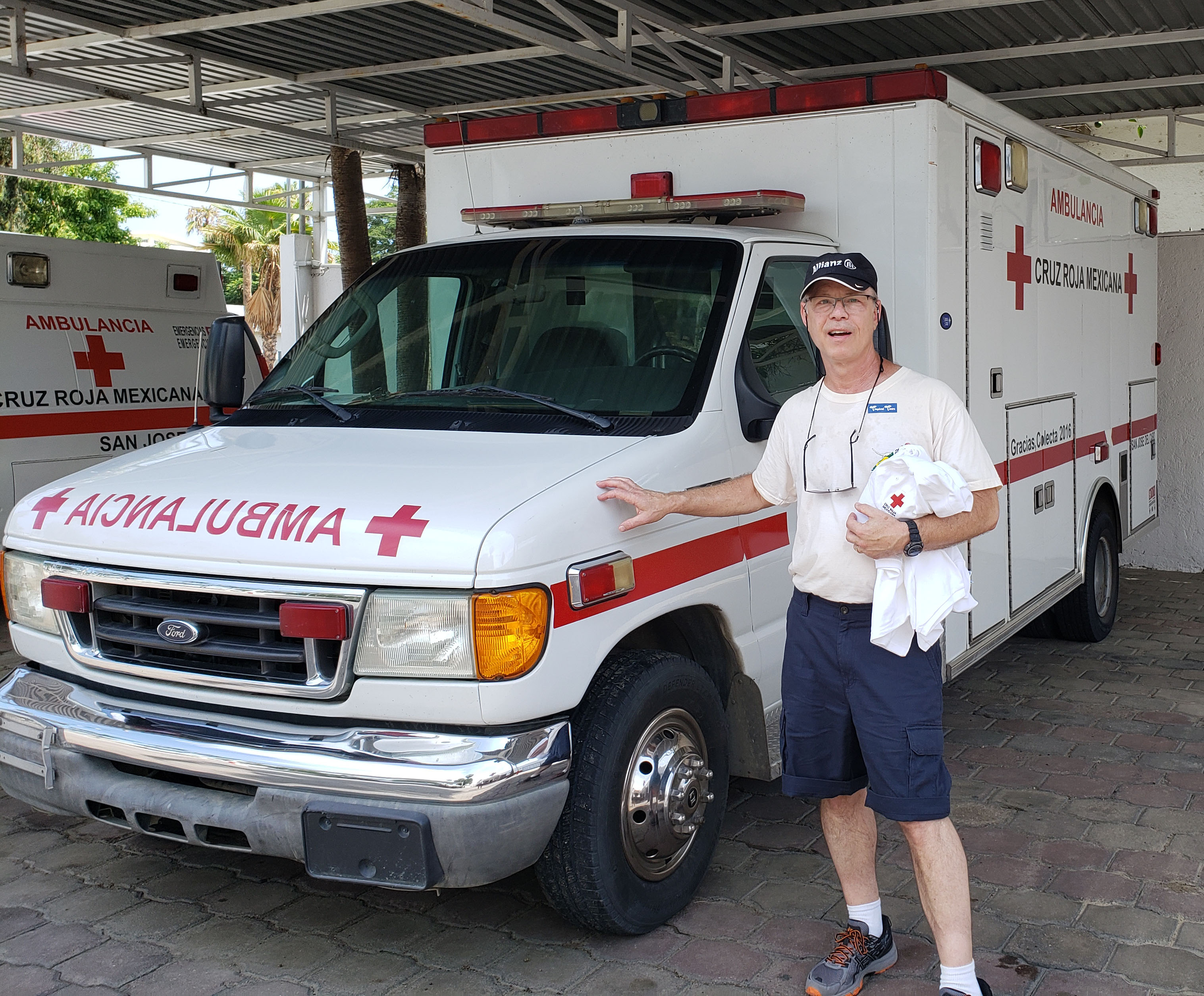
After 2,500-plus shifts spanning 52 years, Unger retired from active volunteering at the end of September. He still keeps in touch with those he served with. While he may have handed in his pager, Unger still keeps an eye on the rescue squad app on his phone.
He also remains connected to the University. A few professors, even a former University president, have hired Unger for financial advice. He’s no stranger to campus, as he and his grandkids occasionally come to basketball games.
After reading newspaper articles about his recent retirement from the rescue, several of his Phi Kappa Sigma fraternity brothers tracked him down.
It’s not hard to find him, he admits. His license plate is RescueDon.
My UR professors were all really understanding if I got a call."